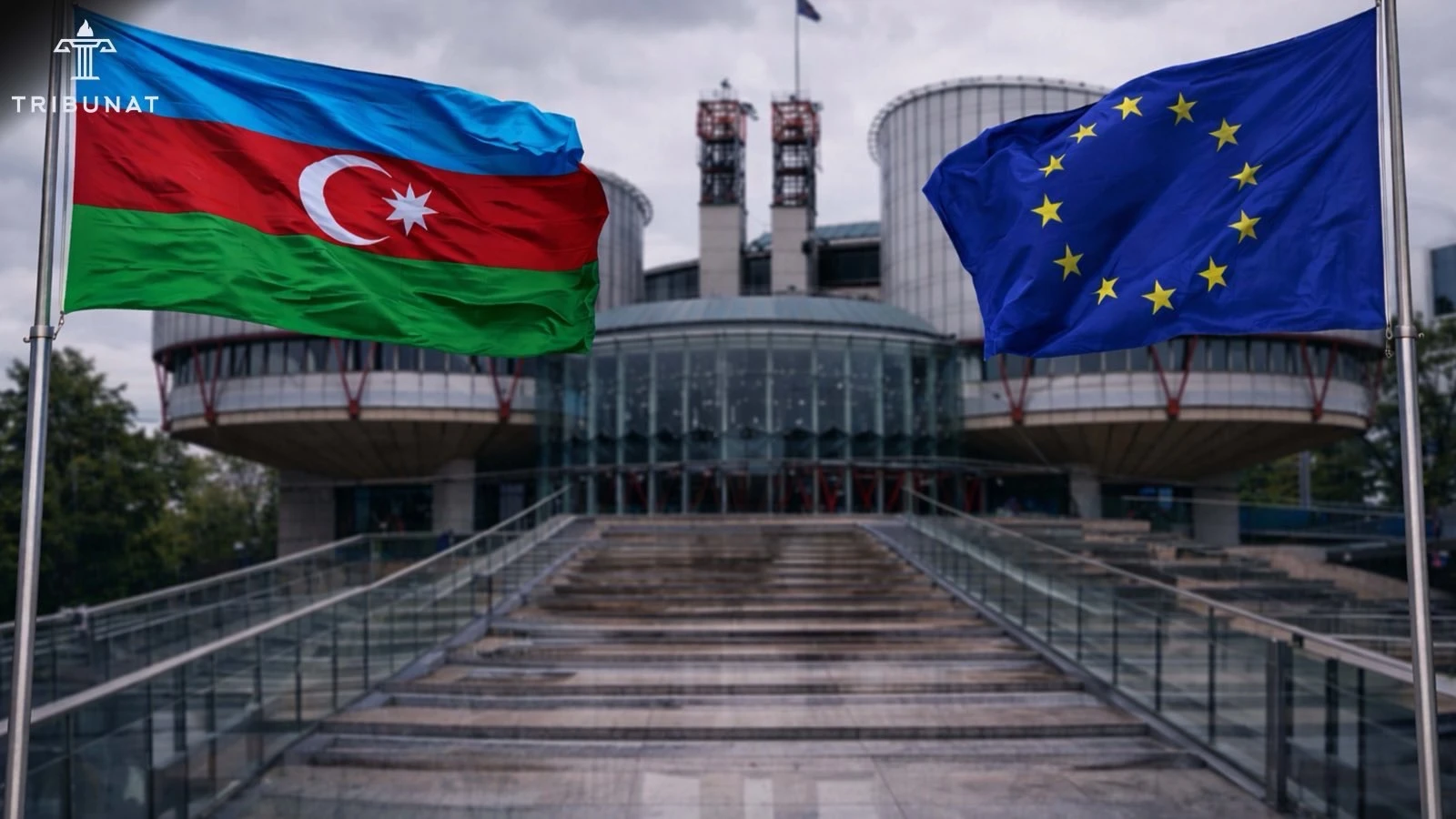
The Republic of Azerbaijan ratified the European Convention on Human Rights (ECHR) in 2002. Article 19 of the Convention provides for the establishment of the European Court of Human Rights (ECHR), and under Article 46, High States undertake to implement final judgments of the Court in cases to which they are Parties.
This obligation is also enshrined in the Constitution. In accordance with Article 12 of the Constitution of the Republic of Azerbaijan, human rights and freedoms must be ensured in accordance with international treaties to which the State is a Party. Article 151 of the Constitution clearly states that in the event of a conflict between normative legal acts (except for the Constitution and acts adopted by referendum) and international treaties, the provisions of the international treaty shall apply. This means that the ECHR has direct superior legal force in the Azerbaijani legal system.
Nonetheless, the data by ECtHR show that so far the Court has adopted 592 decisions regarding Azerbaijan, and of these, no fewer than 393 have not yet been implemented. This means that 66 percent of the decisions have not been executed. The Republic of Azerbaijan ranks second in the ranking of non-implementation of ECtHR decisions, after the Russian Federation (69 percent).
Last year, 48 decisions were adopted regarding Azerbaijan, and 43 of them found a violation of at least one article of the Convention. The majority of the violations concerned the protection of property (Article 1 of Protocol No. 1, 16 violations), the right to liberty and security of person (Article 5, 15 violations), the right to a fair trial (Article 6, 9 violations), and the right to respect for private and family life (Article 8, 8 violations).
But why are decisions by ECtHR not implemented in Azerbaijan?
“Tribunat” has investigated the topic.
The status of the implementation of ECtHR judgments in Azerbaijan describes that the key difference between execution and non-implemented cases is related to their nature and the level of measures required.
The decisions that are enforced mainly concern violations of an individual and limited nature. In these cases, the State’s obligation is usually limited to the payment of compensation or technical measures in relation to a specific applicant. Since no changes in the legislative or institutional system are required, these decisions are implemented relatively quickly and the case is removed from the agenda of the Committee of Ministers of the Council of Europe (CoE), which monitors the execution of Court judgments.
Non-enforced decisions are mainly related to systemic and structural problems. In these cases, the ECtHR finds that the same violations are repeated and requires the State to take general measures such as legislative reform, changing judicial and executive practice, and updating institutional mechanisms. Accordingly, these cases are kept under enhanced supervision by the CoE.
Upon looking at the group of unenforced ECtHR judgments concerning Azerbaijan, it is clear that the problem is based more on repetitive legal mechanisms than on individual cases. There are 53 leading unenforced cases,
The “Mahmudov and Agazade” group of cases exposes systemic problems in the area of freedom of expression. The ECtHR found in this case that the criminal prosecution of journalists for an article of public interest, and in particular the imposition of a prison sentence, constituted a disproportionate interference with Article 10 of the Convention. The Court stressed that the national courts had failed to take into account the role of journalism as a “public watchdog” and the possibility of lighter sanctions. Even though the State had paid compensation at the individual level, it had not taken general measures to eliminate the risk of imprisonment for defamation, and similar violations had been repeated in subsequent cases, and therefore the enforcement of the group had remained open for a long time.
Via the position of the CoE, the issues of the non-compliance of the legislation on defamation with the standards of the Convention and the arbitrary application of criminal law to restrict freedom of expression have been under its control since 2009, and no real structural reforms have been implemented during this period. Yet the authorities have declared at various times that the legislation will be changed, the only progress recorded so far is the decision by the Plenum of the Supreme Court in 2014.
The decision clearly emphasized that courts should maintain a balance between freedom of expression and the protection of honor and dignity, make extensive use of the case law of the ECtHR, and that imprisonment, especially for journalists, should only be applied in exceptional cases. Nevertheless, in the period following the decision, there has been no significant decrease in the number of special prosecutions and the overall data of convictions based on these prosecutions.
This group includes, in addition to the case of Mahmudov and Agazade v. Azerbaijan, the cases of Fatullayev v. Azerbaijan, Hasanov v. Azerbaijan, Azadlig and Zayidov v. Azerbaijan, Aliyev v. Azerbaijan, Khural and Zeynalov (No. 2) v. Azerbaijan, Azadlig and Zayidov v. Azerbaijan, as well as Azadlig and Jabrayilzade v. Azerbaijan. In all of these cases, the main problem is the disproportionate nature of criminal prosecutions for freedom of expression and their impact on the freedom of the press to freely exercise its vital role as a “public watchdog”. The Committee of Ministers considers that individual measures do not solve the problem, but the main problem is the lack of general measures.
The Committee calls on the Azerbaijani authorities to abolish the long-term prison sentences provided for in Articles 147 and 148 of the Criminal Code (defamation and insult), to bring the practice of domestic courts into line with Article 10 of the Convention and the case-law of the ECtHR, and to provide a clear roadmap covering all these steps.
Even though the Government of Azerbaijan has submitted several action plans and reports to the Committee of Ministers on the Mahmudov and Agazadeh group in different years, the content of these documents has been limited to, in particular, the payment of compensation and listing of recommended steps. Although all documents on the abolition of prison sentences for defamation state that legislative reforms are “under consideration”, no specific draft law, clear timetable or institutional mechanism has been presented. The plans and reports, which have been updated from 2014 to 2024, implicitly acknowledge the existence of a structural problem, do not propose real general measures to eliminate it. Accordingly, the Committee of Ministers has not accepted the closure of the supervision of the group and is currently keeping the implementation under enhanced supervision.
The Mammadli group of cases concerns the abuse of deprivation of liberty. The ECtHR found a violation of Articles 5 and 18 of the Convention in this case. The Court concluded that the applicant’s detention was intended to silence and punish him in connection with his election observation and civil society activities and served aims not envisaged by the Convention. Thus, enforcement cannot be limited to individual compensation and formal amendments. Since the issue concerns the functional logic of the criminal prosecution system, enforcement of the group remains open unless general measures are taken.
In addition to the Mammadli v. Azerbaijan case, the “Mammadli group” includes the cases of Aliyev v. Azerbaijan, Ibrahimov and Mammadov v. Azerbaijan, Khadija Ismayilova v. Azerbaijan (No. 2), and Yunusova and Yunusov v. Azerbaijan (No. 2).
Government’s primary individual obligation is to quash the convictions of all remaining applicants, to remove those convictions from their criminal records and to eliminate all negative legal consequences of the criminal prosecution. At the same time, it must ensure that these convictions do not play any role in any new criminal proceedings initiated against the applicants. The Committee notes in particular that the long delays in the cases pending before the Supreme Court since 2019 continue to lead to violations of the applicants’ rights.
At the same time, the Committee of Ministers notes that the violations identified in this group of cases are structural in nature. The application of criminal law contrary to the rule of law is not limited to individual cases and there remains a risk of similar violations being repeated in the future
The Committee of Ministers calls on the Azerbaijani authorities to end the prolonged silence and passivity in the implementation process, to resume constructive and result-oriented cooperation with the Secretariat, and to provide timely and complete information on the measures envisaged.
Mushfig Mammadov and Others reflects a structural problem related to freedom of conscience and the lack of an alternative service mechanism. The ECtHR found in this case that, despite the fact that the Azerbaijani Constitution provides for the possibility of alternative service, those who do not perform military service were in fact held criminally liable because the relevant legislation was not adopted. The domestic courts did not realistically assess the application of Article 9 of the Convention and automatically held them criminally liable by accepting the lack of alternative service as a ground for criminal liability. In this case, the Court clearly emphasized that the failure to adopt a law on alternative service was a systemic problem and that this situation made freedom of conscience protected by the Convention an illusion. This obligation stems both from the obligations assumed by Azerbaijan when it became a member of the Council of Europe and from Article 76 of the Constitution. The payment of compensation does not eliminate this structural deficiency, since the root cause of the violation remains unchanged. Since general measures have not been taken at the legislative level, the same violations are repeated in new cases and, hence, the group implementation is not considered complete.
As long as the law in question is not adopted, there is a risk that the violations will continue. The Committee also demands that all legal consequences of the applicants’ convictions be removed and that conscientious objectors not be subject to future criminal prosecution. However, the authorities have not provided any information on progress in this regard for a long time.
In the action plan submitted in Mushfig Mammadov and Others, the Government states that compensation for the imposed custodial sentences has been paid and individual measures have been completed. At the same time, the issue of adopting legislation on alternative service is presented only in general and vague terms, such as “consultations have begun”, without specifying a specific draft law or a timetable. Although the document recognizes the lack of alternative service as a structural problem, it does not envisage real general measures aimed at eliminating this problem.
The “Khadija Ismayilova group of cases” reflects the structural problems arising at the intersection of journalists’ freedom of expression and their right to respect for private life. The ECtHR found in this case that serious interferences with the journalist’s private life had a direct impact on her professional activities and had a stifling effect on her ability to fulfil her role as a “public watchdog”. The Court stressed that the state had seriously failed not only to prevent these interferences but also to investigate them effectively. The investigation was of a formal nature, the obvious facts were not investigated and those responsible were not identified.
The Court has clearly shown that the positive obligations of the Government are not being fulfilled in the context of attacks on the privacy of journalists. The payment of compensation does not eliminate this problem, since the main issue is the lack of security in the media environment and the failure of law enforcement agencies to respond effectively to attacks against journalists. Since these structural shortcomings persist, the implementation of the group is not considered complete and the cases remain under the control of the Committee of Ministers.
The “Namazov group of cases” exposes structural problems related to the independence of the legal profession and the abuse of disciplinary mechanisms. The ECtHR found in this case that the expulsion of lawyers from the Bar Association for their professional activities was not in accordance with the requirements of the Convention and that these measures were punitive in nature rather than a legal necessity. The Court emphasized that lawyers are integral participants in the administration of justice and that interference with their professional activities requires particularly serious justification.
In addition to the case of Namazov v. Azerbaijan, this group includes the cases of Aslan Ismayilov v. Azerbaijan, Bagirov v. Azerbaijan, Afgan Mammadov v. Azerbaijan, and Farhad Mehdiyev v. Azerbaijan.
In the Bagirov v. Azerbaijan, the Court, citing Article 46 of the Convention, stated that the State cannot be satisfied with merely paying compensation and must take real measures aimed at restoring the advocate’s professional activity. The Committee of Ministers, however, notes that individual compensation does not eliminate the structural problem, since the mechanism for disciplinary liability of advocate has not yet been established in an independent manner and in accordance with the standards of the Convention.
While the Committee recalls the restoration of the applicant’s status as an advocate in the case of Aslan Ismayilov as a positive precedent, it emphasizes that this approach does not apply to the cases of Namazov and Baghirov. Therefore, the Committee considers that, as long as general measures are not taken, there remains a risk of repetition of similar violations and that enforcement cannot be considered complete in the case of the “Namazov group”.
In the action plans submitted for the “Namazov group” (2022, 2024), the government mainly refers to individual measures and states that this part has been completed. As part of the general measures, it is noted that a draft amendment to the Law “On Advocates and Advocacy” has been prepared in order to reform the mechanisms of disciplinary liability of lawyers, but the documents do not indicate the date of adoption of this draft and the implementation mechanism. Consequently, the Committee of Ministers does not consider the implementation of the group to be complete, since the submitted measures do not create structural guarantees ensuring the independence of the legal profession.
It should also be noted that last year, amendments were made to the Law “On Advocates and Advocacy” and a number of codes. Although the amendments contain certain technical and partially positive innovations, the overall picture increases risks in terms of the independence of the legal profession. In particular, the elimination of the limit on the election of the Chairman of the Presidium of the Bar Association more than twice, the adoption of the Presidium’s decisions by open voting, and the granting of “monitoring” authority to the HR increase the likelihood of power consolidation within the Bar Association. More critical points include the extension of the application periods of disciplinary sanctions, the expansion of the types of sanctions (including fines and expulsion), as well as the abolition of the requirement for a court decision to expel a lawyer from the Bar Association, which, instead of reducing it, increases the risk of “arbitrary disciplinary prosecution” that is at the heart of the “Namazov group” case. In this sense, the legislative reform presented by the government as a "general measure" in its action plans has exacerbated the problem, instead of strengthening the guarantees of independence, as expected by the Committee of Ministers. You can read more about the law from our blog.
The Committee of Ministers, in its resolution of 5 December 2017, clearly stated that the Republic of Azerbaijan refused to comply with the final judgment of the ECHR on the right to liberty and politically motivated arrests. In this resolution, the Committee stressed that the immediate and unconditional release requested as an individual measure in the case of politician Ilgar Mammadov had not been implemented, which amounted to a breach of the obligation under Article 46 § 1 of the Convention. For this reason, the Committee of Ministers decided to initiate proceedings under Article 46 § 4 in relation to Azerbaijan for the first time, using a mechanism rarely used in its history.
In the meantime, the matter was referred to the Grand Chamber of the ECHR, and the Court confirmed in 2019 that Azerbaijan had violated its obligations under Article 46 of the ECHR. Following this, I. Mammadov was acquitted against the backdrop of increasing international political and legal pressure.
The website of the Department for the Execution of ECtHR Judgments shows that 79 resolutions have been adopted against Azerbaijan for non-execution of ECtHR judgments. These resolutions reflect persistent delays in the execution process, failure to address structural problems, and inadequacy of measures presented by the government.
Following the Parliamentary Assembly of the Council of Europe did not approve the powers of the Azerbaijani delegation in January 2024, a new stage began in the implementation of ECHR decisions. While previously the problem was mainly related to the failure to implement general measures, after this date there has been a de facto refusal to implement individual measures.
President of the Republic of Azerbaijan Ilham Aliyev stated during his speech at the forum “Towards a New World Order” held at ADA University on April 9, 2025, that Azerbaijan will not recognize the decisions of the ECtHR. The President justified this position by the status of the Azerbaijani delegation in the Parliamentary Assembly of the Council of Europe and stated that if Azerbaijani representatives do not participate in the meetings of the Assembly and are deprived of the right to vote in the election of ECtHR judges, then the decisions of the Court regarding Azerbaijan should also be considered invalid.
Consequently, the payment of compensation under ECtHR judgments has also been suspended since the beginning of 2024. This indicates that even the most minimal part of the enforcement has not been carried out. Measures such as restoring the situation prior to the violation or reviewing the case have practically disappeared from the agenda.
“Tribunat” concludes that the failure to implement the ECHR decisions means a failure to recognize Azerbaijan's obligations under Article 46 of the Convention and the requirements of the Constitution.