Activist Javid Asadov posted on his Facebook account that a database of users who shared critical opinions in the comments section of videos by the Ministry of Internal Affairs (MIA) blogger Mehman Huseynov has been collected. The post claims that the data collection by law enforcement agencies is used to intimidate citizens. The ministry has not yet made any public statements regarding the allegations.
“Tribunat” has analyzed the legality of such practice.
In accordance with Article 2 of the Law “On Personal Data”, any data that allows for the direct or indirect identification of an individual is considered personal data. The same article specifies that information relating to an individual's racial or ethnic origin, family life, religious beliefs and convictions, health or criminal record is considered special categories of personal data.
Bearing in mind that the comments on blogger M. Huseynov's videos contain the users' political opinions, it is feasible to characterize them as special categories of personal data.
The fact that such comments are written in relation to videos on social media resources does not exclude the protection standards of the legislation for personal data. Since, according to the allegations, law enforcement bodes classify authors and information on authors - that is, in the language of the legislation, they are engaged in the collection and processing of personal data. In accordance with law, collection and processing implies the acquisition of personal data in a documented manner in accordance with the law and the operations performed on it (recording, systematization, updating, modification, extraction, anonymization, storage, transfer, destruction of personal data).
By Article 9 of the same Law, the collection and processing of special categories of personal data is not permitted, except for the following:
· when the collection and processing of special categories of personal data is mandatory in cases specified by law;
· when the subject has a written consent (including through the Electronic Government Information System);
· when the special category of personal data belongs to the category of open data;
· when the collection and processing of special categories of personal data is necessary to protect the life and health of the subject, another person or a relevant group of persons and it is impossible to obtain the subject's consent to obtain such data;
· when the collection and processing of special categories of personal data belonging to members of public associations and other non-commercial organizations is carried out by those organizations in order to achieve their legitimate goals and on the condition that they are not provided to a third party without the subject's consent.
In accordance with Article 2.10 of the Rules for the Formation, Maintenance, Integration and Archiving of State Information Resources and Systems, information systems that involve the collection and processing of personal data must be registered with the Register and, in the face of exceptions, collection and processing is allowed only followingly. These exceptions include the collection and processing of personal data in connection with the implementation of intelligence and counterintelligence, operational-search activities, and the protection of personal data classified as state secrets and collected in the national archive fund for the purpose of ensuring national security and rule of law. It is implied that law enforcement agencies may collect and process personal data when it involves illegal activities. In this case, the procedures will be regulated by the Laws “On Police” and “On Operational and Search Activities”.
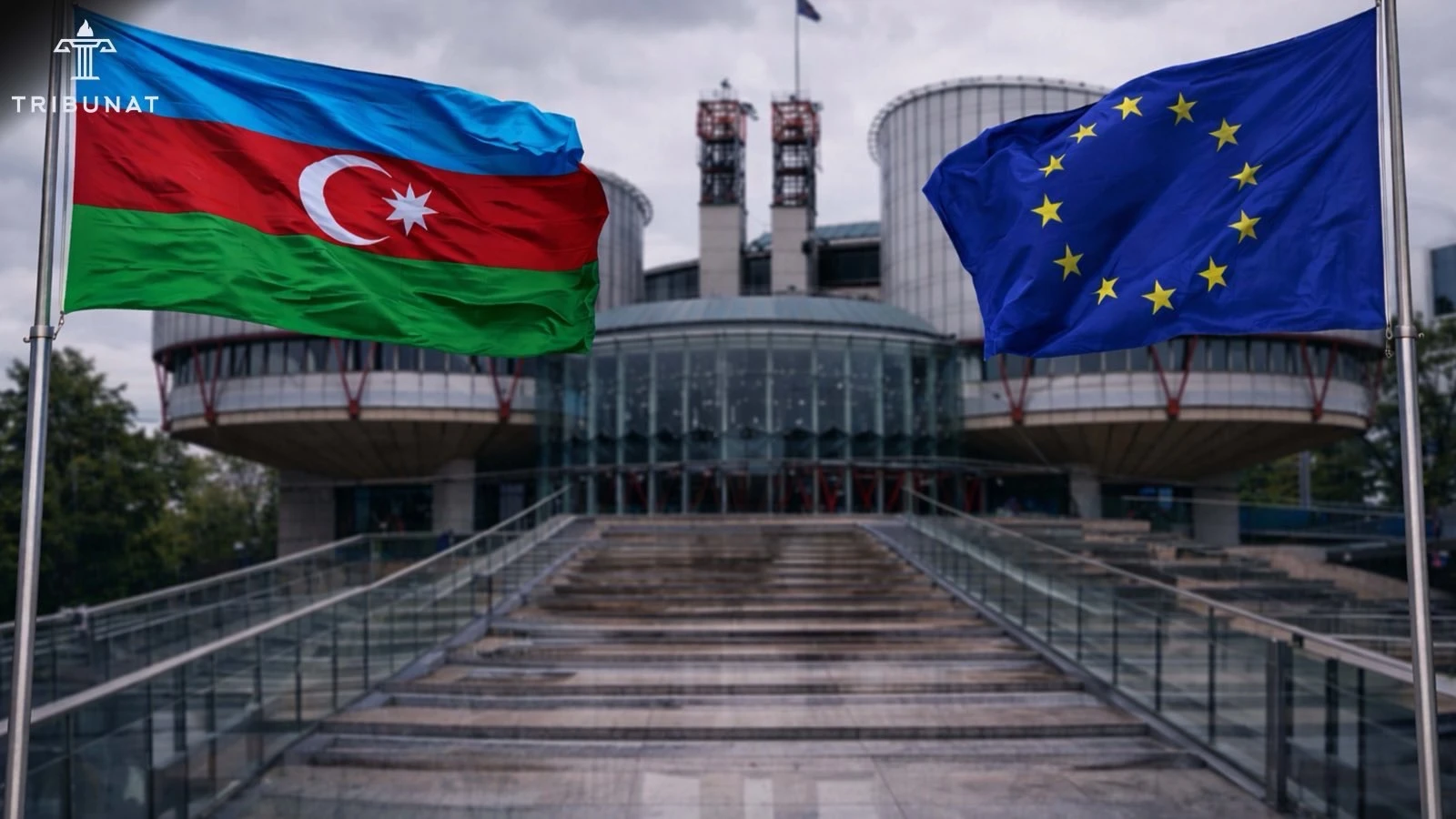
The persecution of users on social media resources based on their posts has developed simultaneously with the use of relevant resources by a wide public base in Azerbaijan. This is expressed from the opinion written by activist Elgiz Gahraman about the president's son, who was recently the subject of the European Court of Human Rights (ECHR) case Gahraman v. Azerbaijan, which ruled on a violation by, to the accusation of users on social media of terrorism and open calls against the state, to the punishment of activists publishing electoral violations and the like. In the list of political prisoners of different years, it is possible to see the names of those who were persecuted for their posts on social networks. For 2015, among those who were subjected to such persecution, we can cite journalists Abdul Abilov and Rashad Ramazanov, for 2019, party functionaries Mirfeyzulla Seyidov, Mahammadali Akhundzadeh, Ahsan Nuruzadeh, for 2024, activists Ruslan Vahabov, Isfandiyar Mammadov and others. In the 2025 “Freedom on the Net” report of the “Freedom House”, Azerbaijan was characterized as a “Not Free” country, scoring 34 points out of a possible 100. The organization specifically emphasized the existence of restrictions on content shared in Azerbaijan and the regular violation of the rights of its users.
The framework for imposing restrictions on freedom of expression on Internet resources by state bodies is expanding every year. For the first time, in 2017, Article 388-1 (Posting information prohibited for dissemination on an Internet information resource or information and telecommunications network, as well as failure to prevent the posting of such information) was added to the Code of Administrative Offenses. The latest amendment to the list of such prohibited information has been made recently - from now on, “information on actions that, when publicly displayed, offend public morality, openly express disrespect for society, that is, on the utterance of immoral expressions or gestures that create the impression of such content, or on the display of parts of the human body in a manner contrary to moral norms and national and moral values” will be considered prohibited information and the wording of which raises questions. The actions mentioned in the disposition of the amendment are vague and can be subject to broad interpretation; this can lead to wider administrative prosecution of social network users, including critics. It should be noted that this article is used by law enforcement agencies to punish both political and non-political rhetoric.
The persecution of social media users for their opinions, including their political beliefs, violates their fundamental rights. Article 47 of the Constitution recognizes everyone's freedom of thought and expression. No one may be forced to express their opinions and beliefs or to change their opinions and beliefs. Article 25 guarantees the equality of rights and freedoms of everyone, regardless of their beliefs. Restrictions on human and civil rights and freedoms based on political affiliation are prohibited. The guarantees of Article 8 of the European Convention on Human Rights, which protects the right to respect for private and family life, also apply to personal data.
To illustrate the application of the Convention’s guarantees to a specific case, it is possible to look at Catt v. the United Kingdom, adopted by the ECtHR in 2019. In the circumstances of the case, John Oldroyd Catt, a United Kingdom citizen, found that his personal data had been collected and processed by law enforcement authorities since he had participated in various public demonstrations. The applicant applied to the Court, alleging a violation of his rights protected by Article 8 of the Convention. The ECtHR stipulated in this context that the legality of the collection and processing of his personal data was closely linked to the necessity in a democratic society (§106). While it was possible to justify the collection of special categories of personal data on security grounds, it was stressed that there was no overriding public need for their indefinite retention and processing (§119). The indefinite collection and processing of special categories of personal data in the absence of an overriding public need could have a chilling effect on democratic participation in society (§123). The failure to carry out a regular review of the collection and processing of special categories of personal data and the failure to delete such personal data due to the alleged technical grounds constituted further aggravating circumstances (§§124-127). Resultantly, the Court passed that the Government had violated the requirements of Article 8.
Upon application of ECtHR's position to the present case, it is viable to conclude that the domestic law enforcement authorities violated the requirements of Article 8. The collection and processing of special categories of personal data by law enforcement authorities is allowed only in exceptional cases. Such exceptional cases cover issues that involve violations of the law and the sharing of critical opinions by users on social network resources, as part of their freedom of expression, cannot be restricted or sanctioned.
“Tribunat” concludes that this practice constitutes a violation of the fundamental rights and freedoms of citizens as another measure aimed at restricting and sanctioning freedom of expression on Internet resources at the domestic level. The arbitrary activities of law enforcement agencies, the weak framework of personal data legislation and its non-compliance, and the upsurge in the grounds for punishing freedom of expression have led to the current intolerable level of violations of fundamental rights and freedoms on Internet resources.