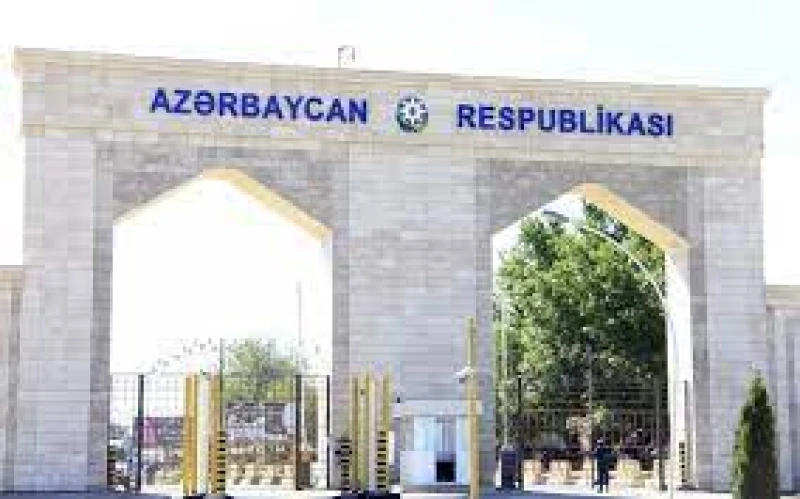
Galib Toghrul, the brother of the party chairman, professor of economics Gubad Ibadoglu, who has been in prison for 45 days, shared information on the social network that his relatives were banned from leaving the country. He claimed that similar prohibitions also applied to relatives who do not have the Ibadoglu surname.
In this article, Tribunat has examined the cases where freedom of movement is applied in the context of the alleged case.
Freedom of movement is defined in international and regional documents such as the Universal Declaration of Human Rights and the European Convention on Human Rights as the freedom of everyone to move freely within their own country or to leave and return to their own country.
According to Article 2 of Protocol No. 4 of the Convention on the Protection of Human Rights and Fundamental Freedoms, to which Azerbaijan is a party, "Everyone shall be free to leave any country, including his own." No restrictions shall be placed on the exercise of these rights other than such as are in accordance with law and are necessary in a democratic society in the interests of national security or public safety, for the maintenance of ordre public, for the prevention of crime, for the protection of health or morals, or for the protection of the rights and freedoms of others.
Furthermore, freedom of movement is also established in domestic legislation. According to Paragraph 3 of Article 28 of the Constitution of the Republic of Azerbaijan, "Everyone lawfully present within the territory of the Republic of Azerbaijan may freely move, choose the place of residence and leave the territory of the Republic of Azerbaijan."
At the same time, according to Article 9 of the Migration Code, a citizen of the Republic of Azerbaijan shall have a right to exit and enter the Republic of Azerbaijan freely by crossing its state border checkpoints and can not be deprived of this right.
This article also stipulates in which cases the right to leave the country can be temporarily restricted. Those cases are defined in the Code as follows:
- when he/she is arrested or any measure of restraint is applied to him/her in accordance – until release, expiration or cancellation of the measure of restraint;
- when he/she is convicted – until completion of the major punishment or exemption from punishment,
- when compulsory medical measures are applied to him/her - until cancellation of applying compulsory medical measures;
- when he/she is convicted conditionally or exempted from punishment conditionally earlier by imposing obligations - until expiration of the probation period or non-served part of the sentence or until complete early cancellation of the conditional conviction or the obligations imposed;
- when punishment against pregnant women and persons who have young children was postponed – until exemption from non-served part of a penalty under the court decision or termination of the remaining part of major punishment;
- when he is called for active military service – until completion of the active military service or release from that service in conformity with the law;
- when there is a valid court decision on temporary restriction of the right of a citizen to exit the country due to the reason of unjustified non-execution in the time limit set for voluntary execution of the writ issued on the basis of the court judgments, orders and administrative acts of the tax authorities to meet timely monetary requirements - until a decision is made to lift the restriction;
- when there is a valid court decision on temporary restriction of the citizen's right to exit the country due to the failure of the citizen to pay to the state budget the arrears and interest on the assessed taxes, the financial sanctions applied, the taxpayer's failure to fulfill the tax obligation within the timeframe – until a decision is made to lift the restriction;
- During entry/exit the countries where preventive vaccinations are required according to international health and sanitation rules or the international treaties to which the Republic of Azerbaijan is a party – until preventive vaccination is made.
According to Article 9.6 of the Migration Code, information on the citizens whose right to exit and enter the country is restricted shall be entered into the restrictions lists of the interdepartmental automated data research system “Entry-exit and registration”, and after the elimination of the relevant grounds, the active status of that information shall be changed.
The Regulations on the interdepartmental automated data research system "Entry-exit and registration" contain cases related to "border crossing restrictions" and the duties of institutions related to these cases. Various state bodies are responsible for entering information on persons with border crossing restrictions related to their fields or integrating information into the system related to the elimination of these restrictions. The Regulations stipulate that following state bodies are responsible for integrating information about the following persons into the system related to border crossing restrictions, and updating them when these restrictions are removed:
- Ministry of Internal Affairs, Ministry of Justice, State Border Service - about persons who are wanted, about whom a decision on arrest was made, who were involved as an accused person in a criminal case, and about whom a measure of restraint is applied;
- State Border Service - about persons who violated the border crossing regime, were expelled from the country, foreigners who were previously not allowed to enter the country for various reasons;
- State Security Service - about citizens who have been released or previously released to work with state secrets, whose right to go to permanent residence abroad is restricted, persons suspected of participating in terrorism and other forms of organized transnational crime, as well as persons whose presence in the country is undesirable from the point of view of national security;
- Foreign Intelligence Service - about the employees or former employees of the Foreign Intelligence Service of the Republic of Azerbaijan, who have been released or previously released to work with state secrets, whose right to live abroad is restricted;
- Ministry of Justice – about persons who have been sentenced to imprisonment for a certain period of time, life imprisonment, restriction of liberty, corrective works, public works, fines, persons who have been sentenced to a conditional sentence or who have been conditionally released from the sentence early and who have been assigned duties not to change their permanent place of residence or not to go to certain places, persons who have been convicted but the serving of whose sentence has been postponed, persons subject to mandatory medical measures, persons whose right to leave the country is temporarily restricted by the court's decision due to the non-execution of the executive document issued on the basis of the court decision, order and the administrative act of the tax authorities regarding the payment of monetary claims at the time specified for voluntary execution;
- Ministry of Defense - about persons detained in a disciplinary military unit;
- State Service for Mobilization and Conscription - about citizens called up for compulsory military service;
- State Tax Service under Ministry of Economy - about a taxpayer or an insurer whose right to leave the country is temporarily restricted by a court decision, or the head of the executive body of a legal entity to ensure the payment of accrued debts and interests, and financial sanctions imposed in the event of non-fulfillment of tax, compulsory state social insurance, compulsory health insurance, and unemployment insurance obligations in the cases and periods specified by law.
In domestic legislation, except for the special cases listed above, restrictions on exit from the country cannot be imposed, and restrictions on exit in addition to these cases cannot be considered legal.
There are also several precedent judgments of the European Court of Human Rights against Azerbaijan regarding the violation of the prohibition of freedom of travel. In the cases of Karimli v. Azerbaijan, Hajibeyli v. Azerbaijan, Democracy and Human Rights Resource Center and Mustafayev v. Azerbaijan, the Court recognized the violation of Article 2 of Protocol No. 4 of the Convention. If this right is restricted, this restriction must strike a balance between public justice and individual freedom.
In the case of Mursaliyev and Others v. Azerbaijan, the Court emphasized that the ban on leaving the country against persons who acted only as witnesses in criminal proceedings was an interference with the freedom of movement, and it was important that the interference was in accordance with law and necessary in a democratic society. The expression “in accordance with law” not only requires that the impugned measure should have some basis in domestic law, but also refers to the fact that it should be accessible to the persons concerned and foreseeable as to its effects. In other words, the ban on leaving the country without being prescribed by the law, without a court decision, without providing any reason, is a restriction of freedom of movement according to both the Convention and the requirements of domestic legislation.
Thus, the arrest of a person cannot prevent his relatives from leaving the country, and unless there are cases listed in the requirements of the Migration Code, this type of ban is illegal and a violation of freedom of movement.