A public letter addressed from the Baku Pre-Trial Detention Center by journalist Aysel Umudova, detained in 2024 as part of the “Meydan TV case”, raises serious legal questions about the behavior of a police officer while in custody under the supervision of law enforcement agencies.
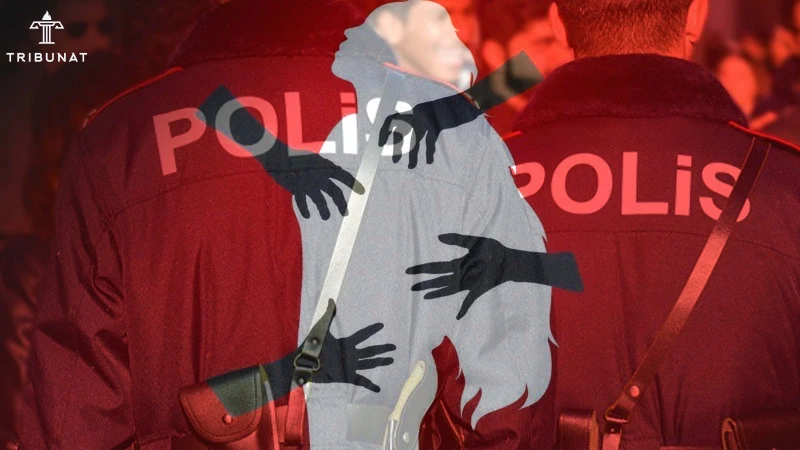
As observed from the letter, Umudova was arrested by plainclothes police officers without prior warning, without any legal basis or explanation. The physical contact, which was carried out under the guise of “first aid” while she was having a panic attack on the way to Baku, occurred without the journalist’s consent and outside the scope of medical necessity. The journalist describes what happened as follows: “The large, dark-skinned, gray-haired man sitting to my left was trying to provide first aid. Or so I thought. He rubbed my wrist to stabilize my condition. When I felt the hand I felt on my wrist on my leg, I thought his arm had touched it. I moved his hands away from my leg. Then, when he put his hands on my knee again and touched my leg, I quickly withdrew my hand and put it in my pocket. Realizing that I understood the situation, he moved to the other end of the seat.”
It should be particularly noted that this incident occurred while the journalist was under police custody, with limited freedom of movement, and in a physically and psychologically vulnerable state. Such behavior raise the State's responsibility under both domestic law and international obligations.
“Tribunat” will provide a legal assessment of the behavior occurred during detention within the framework of the concept of harassment, and analyze the existing mechanisms and gaps in Azerbaijani legislation in this article.
Such instances of harassment by police officers during detention and in police stations in Azerbaijan are not limited to A. Umudova's personal experience. The existence of other similar instances suggests that such behavior is not isolated incidents, but a broader and systemic problem.
Hence, independent journalist Ulviyya Ali, who was arrested in the same case in 2025, mentioned that she was threatened with rape and subjected to violence twice while in police custody. These cases indicate serious problems with the personal safety and integrity of women, especially under police custody.
Harassment under police custody is not limited to journalists. Young people detained by police during this year's protest also reported experiencing violence and sexual harassment at the police station.
Cases of violence under police control are not new or random and are rather a familiar problem in society. For instance, in 2006, a court verdict was issued in the city of Ganja against former police officer Koroghlu Gasimov for abuse of power, violence and immoral acts against detainees, and he was fined.
On August 4, 2021, women's rights activists held a protest in front of the Khazar District Police Department in Baku, protesting the lack of protection for Sevinj Maharramova in spite of her repeated appeals to the police and the inaction of the Ministry of Internal Affairs in this matter. Following the protest, the women's rights activists were taken to the department by police officers, where they faced physical and moral violence, degrading treatment, and threats of rape. They were insulted, taken to separate rooms, and beaten.
Upon looking at the annual reports of the State Committee for Family, Women and Children's Issues of the Republic of Azerbaijan, as the state body responsible for ensuring gender equality, no information on cases of harassment under police control or any special measures taken in this direction is observed. Even though the reports focus on domestic violence, social support mechanisms and awareness-raising measures, there is no separate assessment or response to the risks of violence and harassment against women in places of detention, including police stations.
Over the years, complaints have continued to be made that detainees, especially women, feel unsafe in police stations. It is implied that the problem cannot be explained solely by the behavior of individuals. It is a system with poor accountability. And the fact that people are subjected to fear and humiliating treatment in a place where the state has complete control creates distrust, and this distrust has persisted for years.
The concept of harassment is not limited to open violence or physical harm. Harassment includes any verbal, non-verbal or physical conduct that violates a individual's dignity, humiliates or creates an intimidating, offensive or hostile environment, regardless of its purpose or outcome, without the individual’s consent.
Such behaviour should be assessed more seriously, especially in cases where the balance of power is tilted in favor of one party (for instance, under police supervision). Since an individual detained by the police loses freedom of movement and effectively falls under the full control of state authorities. In such circumstances, any physical contact carried out without the consent of the detainee, especially behavior that is not justified by medical necessity and goes beyond the scope of professional medical intervention, can be assessed as harassment. For female detainees, this risk is even higher, since such situations are directly related to issues of sexual integrity and personal safety.
The incident described by Aysel Umudova appears to involve repeated physical contact under the guise of “first aid” against her will. The fact that the behavior continued despite the journalist’s overt objection to this contact, as well as the fact that the incident took place under police custody, in a closed environment and without freedom of movement, precludes these circumstances from being considered accidental or necessary medical intervention. Furthermore, the journalist was not provided with professional medical care, despite her physical and psychological vulnerability.
In this regard, the conduct in question is an invasion of a person's physical integrity, personal boundaries and dignity and combines the main elements of the concept of harassment - lack of consent, power imbalance and psychological impact. For this reason these conducts should be assessed as harassment from a legal perspective.
What about Azerbaijani legislation?
The Criminal Code of Azerbaijan does not provide for “sexual harassment” as a separate criminal offense. Sexual behavior is generally considered a crime only in cases of force, intimidation, or overt coercion. It implies that behavior that occurs without consent but without force, that degrades a person’s dignity, and that has a psychological impact is often not covered by the Criminal Code. In particular, sexual touching that occurs under police supervision does not fall within the scope of existing articles, making the criminal-legal assessment of such cases difficult.
The Code of Administrative Offenses does not regulate “sexual harassment” as a separate legal concept. In some cases, such behavior can be assessed within the framework of “administrative offenses against public order, public security and public morality”. However, this approach does not reflect the essence of sexual harassment and does not take into account the gender-oriented, personal inviolability and psychological impact of the behavior. Simultaneously, there is generally no separate regulation in the Code of Administrative Offenses regarding cases of sexual harassment that occur under police supervision. Resultantly, assessing sexual harassment as an administrative offense leads to a weak assessment of such behavior from a legal perspective. In addition, although the Code of Administrative Offenses does not consider sexual harassment as a separate administrative offense, pressure on an employee who has been subjected to sexual harassment for complaining may lead to administrative liability. However, this regulation is mainly applied within the framework of labor relations and does not create an effective legal mechanism for cases that occur under police custody.
The Law of the Republic of Azerbaijan “On Guarantees of Gender (Men and Women) Equality” explicitly states that sexual harassment is inadmissible, and this concept is used in the context of labor or service relations. By law, sexual harassment is understood as immoral behavior that humiliates and insults a person in labor or service relations, arises from belonging to another gender or sexual orientation, and manifests itself in physical actions (touching, hitting), obscene words, gestures, threats, defamatory offers or invitations. Police custody, detention, and relations with state authorities are not included in the scope of this regulation. The law prohibits sexual harassment, but it does not create any sanction mechanism.
Article 18 of the Law stipulates that individuals violating the requirements of this law are liable in accordance with the legislation. Nonetheless, it does not specify the kind of liability. This ambiguity entails that in practice, victims often do not know where and how to turn. Consequently, the law recognizes sexual harassment on paper, but does not create a real protective mechanism, especially for cases that occur under police supervision.
Is the appeal procedure on police behavior in such cases effective?
In accordance with the legislation of Azerbaijan, there is a right to lodge a complaint against illegal actions of police officers, and provided for in the law. According to the Constitution of the Republic of Azerbaijan, everyone has the right to file a complaint against the actions or inaction of state bodies and officials and to appeal to the court. This right also applies to complaints regarding the activities of police officers.
According to the Law “On Police”, police officers must adhere to the rule of law in activities and must not violate human rights and freedoms. The law does not exclude the possibility of filing complaints about illegal actions of police officers and indicates that liability is envisaged in such cases. Via law, it is unacceptable for the police to treat any individuals in a manner degrading human dignity. It is prohibited to threaten, torture, or otherwise influence persons who have committed or are suspected of committing a crime in order to force them or other persons to provide information or to confess to committing a crime. When an individual’s rights, freedoms, and legitimate interests are violated by police officers, the police authority is obliged to take necessary measures to restore the violated rights, freedoms, and legitimate interests of that person and to compensate for the damage caused.
Complaints about the actions of police officers can be filed in several ways: through a written or oral appeal to the prosecutor's office, by appealing to the internal security or control structures of the Ministry of Internal Affairs, as well as to the courts.
In accordance with the legislation, the prosecutor's office exercises procedural control over the implementation and application of laws in the activities of investigative and operational-search bodies and has the authority to initiate criminal proceedings if necessary.
In other words, even if procedures are in place, this does not mean that they work effectively in practice. One of the major problems is the independence of the investigation. Complaints against police officers are often investigated within the same system, which raises grave doubts about the objective and impartiality of the investigation. Such complaints are not handled by a body institutionally independent of the individuals being investigated – the police officers themselves. On the contrary, all complaints remain within the same structure and in some cases, the investigation is even conducted in the institution where the police officer complained about works. Even though the body conducting the investigation may appear formally independent, the existing institutional and hierarchical ties mean that this independence is not ensured in practice.
Another vital problem is related to evidence. Cases under police custody, especially during detention, usually take place in closed conditions or are not witnessed at all, or the witnesses are only other police officers who were present during the detention. Obtaining video or other technical evidence is beyond the capabilities of the victim. The statement of the detainee is often not accepted as sufficient evidence. This situation leads to the fact that complaints remain ineffective, especially in cases where it is difficult to prove, such as sexual harassment. Therefore, such complaints are often dismissed due to lack of evidence or closed without any investigation at all.
These problems are also reflected in international reports, indicating violence and degrading treatment in police custody remain a systemic problem in Azerbaijan. The 2024 Report on Human Rights Practices of the US Department of State notes that there is reliable information on torture, inhuman and degrading treatment, as well as violence against individuals detained by the police. The report specifically emphasizes that effective and independent investigations into such violations are not conducted by state authorities, and no credible steps or measures have been taken to identify and punish officials who have committed human rights violations. All together, it is indicated that impunity for violence remains a serious problem within the Ministry of Internal Affairs system.
The failure of accountability of police officers for allegations of violence and the political protection of them has been an institutional approach in Azerbaijan for many years. The roots of this approach go back to the events that took place in the run-up to and following the presidential elections in October 2003. At the meantime, protests in Baku and the regions were violently dispersed by the police, hundreds of people were detained, and cases of killings, beatings, and inhumane treatment were documented by international organizations. Despite calls from international organizations to hold police officers accountable for violence, these demands have not yielded results in practice and no real punishment mechanisms have been put in place. It entails that police violence is tolerated at the political level.
This position was also clearly expressed in subsequent years. In 2007, during a speech at the Police Academy, President Ilham Aliyev responded to the calls by international organizations via stating that police officers accused of violence “did their duty” and “no one will be punished,” while also openly declaring his support for the police. This speech can be seen as a political position that clearly demonstrates the exclusion of responsibility for police violence and legitimizes the climate of impunity.
The same approach prevailed in subsequent years. In 2023, during the protests of residents protesting the establishment of a cyanide-containing waste lake belonging to a gold mine in the village of Soyudlu in the Gadabay region, ruthless police intervention and violence caused public concern. Following events, the president's speech presented the protests as unacceptable, unequivocally defended the actions of police officers, and emphasized that any resistance to the police was a crime. The messages about harsh punishment in those speeches also attracted attention.
The pattern shows that, although allegations of police violence have occurred at different times, attitudes towards have remained unchanged and real punishment mechanisms have not been activated. It is no coincidence that in such an environment, complaints about illegal actions by police officers cannot be effectively and independently investigated. The infeasibility of proving conduct that occurs in closed conditions during detention and the ineffectiveness of existing complaint mechanisms often lead to these cases being unsuccessful, ultimately creating a climate of impunity. This further increases the risk that cases of violence and sexual harassment under police supervision will not be effectively investigated.
The European Court of Human Rights (ECtHR) has found a violation of Article 3 of the Convention in a number of cases concerning Azerbaijan for the failure to effectively investigate complaints about the conduct of law enforcement officers. In the Court's case-law on Azerbaijan, violations of Article 3 of the Convention have been found in 49 decisions concerning Azerbaijan since 2004. According to the Court's established position, the State's obligation is not limited to refraining from ill-treatment or violence. At the same time, the State must ensure that such allegations are investigated independently, promptly and in a manner that can produce real results.
Sexual harassment and degrading treatment of persons in police custody is particularly gravee under the European Convention on Human Rights. The ECtHR noted in Aydın v. Turkey (Application No. 23178/94, §83) that rape committed by a public official against an individual in custody must be regarded as a particularly serious and abhorrent form of ill-treatment, since the perpetrator can easily exploit the victim’s vulnerability and weak resistance. Furthermore, rape leaves deep psychological scars on the victim’s psyche that heal more slowly over time than other forms of physical and psychological violence.
As regards the issue of the independence of the investigation and investigation into ill-treatment, the Court noted in Najafli v. Azerbaijan (Application no. 2594/07, § 52) that in an investigation into ill-treatment, the investigating authority had entrusted the main and decisive part of the investigation — namely the identification of the persons who had committed the alleged ill-treatment — to the very body that was in fact accused of committing the very offence. In the Court’s view, the formal assignment of the investigation to another police department was of no real significance in this case. Since both the individuals conducting the investigation and the police officers who had allegedly committed the offence were colleagues working in the same public authority, this raised serious doubts as to the independence and impartiality of the investigation.
In accordance with the established case-law of the ECtHR, Article 8 of the Convention not only protects the individual from direct interference by the Government with his private life, but also the obligation of the State to effectively protect individuals against violence and harassment perpetrated by third parties. The Court has repeatedly stressed that cases of violence and harassment pose a serious threat to the physical and moral integrity of an individual, as well as to his private life, and that, therefore, the Government’s positive obligations come into play in such cases. In particular, in cases of harassment or violence occurring under the supervision of law enforcement agencies, the Government’s responsibility is even more aggravated, since the victim is in a particularly vulnerable position in a situation where he is under the supervision and protection of the Government.
The Convention on the Elimination of All Forms of Discrimination against Women (CEDAW) sets out broad obligations for States to combat gender-based violence. CEDAW General Recommendation 19 states that States should ensure that legislation against rape, sexual violence and other forms of gender-based violence provides adequate protection for all women and respects their physical and moral integrity and dignity. States should establish effective and functional mechanisms to prevent such cases, effectively investigate them and punish those responsible.
In terms of international legal standards, involuntary and degrading physical contact with women under police custody should not be considered as random or individual acts, but as serious interference with human dignity and personal integrity. Such acts carry special gravity since they occur under state control and trigger the state’s obligation to protect and investigate.
Our analysis also shows that the cases of violence and sexual harassment under police supervision in Azerbaijan cannot be explained solely by the behavior of individual police officers. The root of the problem lies in a number of systemic reasons. These include gaps in the legislation, the lack of clear regulation of sexual harassment with effective sanction mechanisms in the Criminal Code and the Code of Administrative Offenses, the lack of a separate legal framework for sexual harassment under police control and detention conditions, and the fact that this concept is mainly considered only in the context of labor relations. Simultaneously, the lack of institutional independence of complaint and investigation mechanisms for the actions of police officers also contributes to the persistence of this problem.
Concurrently, the fact that the illegal actions of police officers have been virtually protected and left unpunished by the political system for many years creates a favorable environment for the repetition of these cases. In this context, the failure to effectively investigate complaints about the actions of police officers is not only a legal and institutional problem, but also a matter of political will. In the context of open or indirect messages of support voiced at the highest political level, it does not seem realistic to conduct independent and impartial investigations within law enforcement agencies. Such political messages reinforce the climate of impunity, weaken the accountability of law enforcement agencies, and seriously affect the objectivity of investigations.