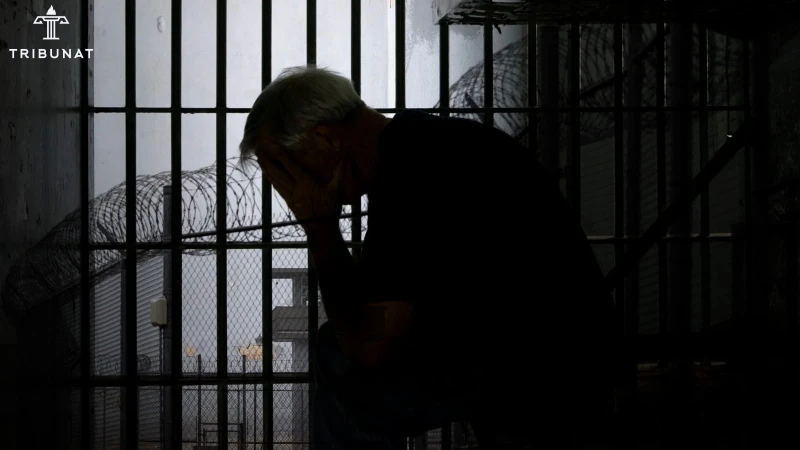
In early January 2025, blogger Rashad Ramazanov, known as a political prisoner, voiced the gruesome conditions in Penitentiary Institution No. 15, where he was being held. In his call to the public, the prisoner stated that sanitary and hygienic rules were violated in the institution in question, the rules for the detention of prisoners were not followed, and numerous problems with nutrition.
To conduct a comprehensive legal analysis of these statement, the “Tribunat” platform presents two different articles. The first article, which has already been published, discusses the difficulties in relation with the legislative regulation and practical implementation of prisoners' nutrition, and the second article provides a legal analysis of other issues related to their material and welfare support.
Accessibility to material and welfare support
One of the problems related to the prisoners’ material and welfare support is their provision goods. Periodically published news in the media states that prisoners, especially those who are new to pre-trial detention centers and penitentiaries and those in need, are not provided with new clothes, hygiene products, and bedding, and have to rely on their families for these issues. The Report of the Human Rights Commissioner (Ombudsman) on the Activities of the National Preventive Mechanism Against Torture dated 2022 also devotes extensive space to these issues. The report found that detainees in many places, including the Temporary Detention Places of Nasimi and Absheron District Police Departments, Pirallahi, Shamkir, Tovuz District Police Departments, Pre-Trial Detention Center No. 2, and Penitentiary Institution No. 1, prisoners were not provided with hygiene products, bedding was not changed on time, or bedding was dirty. In light of Azerbaijan's refusal to cooperate with the Council of Europe's Committee for the Prevention of Torture (CPT), the Committee's report on its 2022 ad hoc visit, published on 3 July 2024, notes that following Penitentiary Institution No. 4 and the Penitentiary Service's Educational Institution, the delegation observed individuals in both institutions purchasing sanitary and hygiene products at their own or family's expense (including diapers, baby food and children's clothing) (CPT, 2022 visit report, paragraph 45).
It is undisputed that the legislation allows families of prisoners to bring products according to forms and norms established, but this regulation is conditional. In accordance with the Internal Disciplinary Rules of Prisons and the Internal Disciplinary Rules of Penitentiary Institutions, prisoners in penitentiary institution must in any case, and arrested, if they lack suitable clothing, be provided with clothing, underwear and footwear at state expense, taking into account the seasonal and climate conditions. In accordance with Appendix No. 5 of the Cabinet of Ministers’ Resolution “On Approval of Material and Welfare Norms for Detainees or Arrested”, the norm and exact number of these products are regulated. Accordingly, arrested should be provided with a winter and summer hat, a warm jacket, a suit, 2 shirts, 2 thin and warm undershirts, 2 T-shirts and undershirts, 12 pairs of socks, 2 pairs of shoes, 1 pair of slippers and gloves at state expense, and women should be provided with a warm and thin headscarf, a warm jacket, 2 skirts, blouses, dresses, undershirts, 3 trousers and a bib, 4 tights, 6 pairs of socks, 12 hygiene packages, 2 pairs of shoes, 1 pair of slippers and gloves. A similar provision applies to temporary detention facilities and penitentiaries with Annexes Nos. 8-9 and 11-16 to the Cabinet of Ministers' Resolution “On Approval of Material and Welfare Norms for Detainees or Arrested” and “On Approval of Material, Nutritional and Welfare Standards for Prisoners”, respectively.
The legislation also recognizes the right of prisoners to be provided with bedding and accessories. According to Appendix No. 13 of the Cabinet of Ministers’ Resolution “On Approval of Material and Welfare Norms for Detainees or Arrested”, detainees in temporary detention facilities and pre-trial detention centers should be provided with 2 blankets, mattresses and pillows, made of cotton and fleece, every two years, they should be given 2 sheets, 2 pillowcases, 2 hand and face towels every six months, and beds, nightstands and chairs should be replaced every 5 years. A similar provision was established for penitentiaries by the Cabinet of Ministers’ Resolution “On Approval of Material, Nutritional and Welfare Standards for Prisoners”.
In regards with hygiene products, according to Appendix No. 6 of the Cabinet of Ministers' resolution “On Approval of Material, Nutritional and Welfare Standards for Prisoners”, detainees should be provided with 250 grams of household soap, 100 grams of hand and face soap, 150 grams of washing powder, 10 razors for men and 3 for women within 1 month, one toothpaste, tooth powder, 1 piece of toilet paper within 2 months, and 1 toothbrush within 3 months. A similar provision was established for penitentiaries by the Cabinet of Ministers' Resolution “On Approval of Material and Welfare Norms for Detainees or Arrested”.
These minimum requirements are also provided for in Article 20 of the European Prison Rules. According to Article 20.1 of the Rules, prisoners who do not have suitable clothing shall be provided with climate-appropriate clothing. According to Article 21, each prisoner shall be provided with a separate bed and individual bedding, which shall be changed as required to ensure that they are kept in good condition and clean.
Sanitary facilities, heating and shower issues
Another notable problem related to prisoners' material and welfare conditions is related to sanitary facilities, showers, and heating in the institution. Prisoners claimed that water is often cut off or not available at all in the institutions, those who protest are punished and tortured, and that taps are even closed to prevent people from using water in the toilet, and an aftafa (a type of water bottle commonly used in sanitary facilities) is sold for 20 qepiks.
According to Article 19 of the European Prison Rules, prisoners must have access to sanitary facilities that are unobstructed, hygienic and allow for solitude, and that there must be a sufficient number of baths and showers in the institution, and that each prisoner must be able to use them at a temperature suitable for the climate, every day if possible, and at least twice a week or more often if necessary to maintain hygiene. Though the legislation on the rights of prisoners in Azerbaijan does not specifically regulate the right to water, it does establish certain benchmarks. Article 338 of the “Internal Disciplinary Rules of Penitentiary Institutions” stipulates that every prisoner must be provided with conditions to use drinking water at any time. According to Article 5.6 of the “Internal Disciplinary Rules of Prisons”, detainees must be able to wash at least once a week, and at least twice on hot days. In the case of Insanov v. Azerbaijan, the applicant alleged that the prison, which held between 700 and 950 people, had only 14 toilets and 7 showers and no constant running water. The Court held that the sharing of one toilet among more than 50 people and the lack of running water, which brings up a dirty environment, were capable of causing the applicant feelings of distress and humiliation (Insanov v. Azerbaijan, §126).
Other claims are related to the poor ventilation system and the prolonged cold temperatures in the institutions during winter. The legislation also makes certain regulations in this regard. According to Article 336 of the Internal Disciplinary Rules of Penitentiary Institutions, as well as Article 10.2 of the Internal Disciplinary Rules of Temporary Detention Places, renders inadmissible for the air temperature in living rooms in institutions to be lower than +18 degrees Celsius during the cold season. Unfortunately, a similar norm is not provided for pre-trial detention facilities.
Another problem concerns the conditions in temporary detention facilities. The 2022 report of the CPT delegation indicates that in temporary detention facilities (usually, police stations) toilets are not fully separated, people are kept in offices or corridors, and are even forced to sleep with their hands handcuffed to radio poles or furniture (CPT, 2022 visit report, paragraph 37). The same assumption can be found in the 2017 report. It is specified that due to the lack of out-of-cell activities, open visits, and limited space for movement, it is unacceptable to hold individuals in the State Security Service Temporary Detention and Pre-Trial Detention Facilities.
Generallu, many penitentiary institutions in Azerbaijan, including Ganja Pre-Trial Detention Facility No. 2 and Baku Pre-Trial Detention Centers No. 3 (located in Shuvelan settlement), were built during the Soviet rule and have outdated infrastructure that does not comply with modern requirements. Although relevant reforms were implemented by the Presidential Decree of February 10, 2017 (such as Penitentiary Institution No. 4 for women, a modern institution for minors, penitentiary complexes in Nakhchivan and Sheki, as well Umbaki and Lankaran), there is still a necessity to build additional penitentiary facilities or renovate existing ones across the country.
For instance, the CPT delegation’s 2022 report recommended that the authorities should accelerate the construction of new facilities. During its 2017 visit, the delegation found the conditions of detention in the pre-trial detention centre in Baku (Zabrat) and in the prisons in Sheki and Nakhchivan to be generally satisfactory, but noted that conditions in and Shuvelan 3 Pre-trial Detention Centres №2 and №3 located in Ganja and Shuvelan were extremely poor, with cells in a dilapidated, dirty, poorly lit and unventilated, overcrowded condition. It was recommended that the latter two facilities be closed as soon as possible (CPT, 2017 visit report, p. 5).
Overcrowded facilities
Yet another issue frequently criticized by international organizations in Azerbaijan is the problem of overcrowding in temporary detention facilities, pre-trial detention centers, and prisons.
Reports from various sources on this issue paint a disturbing picture. For instance, according to Rashad Ramazanov, due to a lack of space in Penitentiary Institution No. 15, some prisoners are forced to sleep either on the floor or in shifts. According to information provided by AbzasMedia’s detainees in November last year, many of the women detained in the Baku Pre-Trial Detention Center either sleep on the floor or share a bed with two people, even causing one to fall to the floor. According to another remark, 19-20 people are being held in an 8-bed cell in the same pre-trial detention center. Another activist expressed infeasibility to even move around due to the congestion in the temporary detention center.
The systemic nature of the problem is also reflected in the 2022 report of the National Preventive Mechanism Against Torture of the Commissioner for Human Rights (Ombudsman). The report denotes that Baku Pre-trial Detention Center, designed for 2,500 people, actually holds 3,500 people, Pre-trial Detention Center No. 2, designed for 700 people, holds 800 people, and Pre-trial Detention Center No. 3, designed for 1,050 people, holds more than 1,400 people.
A CPT delegation visiting the Baku Pre-Trial Detention Center also reported that the facility was overcrowded by 121 percent. The facility, which has a total capacity of 2,500, held 3,017 prisoners. The Committee said that there was less than 2 square meters of space per person, and that prisoners were allegedly forced to share beds or sleep in shifts. The Committee called on Azerbaijan to comply with the minimum living space requirement of 4 square meters per person in multi-occupancy cells and at least 6 square meters per person in single-occupancy cells.
These requirements from the Committee’s minimum standards for the conditions of detention of prisoners, CPT/Inf (2015) 44 are:
- 6m² of living space for a single-occupancy cell + sanitary facility
- 4m² of living space per prisoner in a multiple-occupancy cell + fully-partitioned sanitary facility
- at least 2m between the walls of the cell
- at least 2.5m between the floor and the ceiling of the cell
According to Article 3.1 of the “Internal Disciplinary Rules of Prisons”, the standard living space for arrested persons in a pre-trial detention center cannot be less than 4 square meters. Similarly, according to Article 10.2 of the “Internal Disciplinary Rules of Places of Temporary Detention”, arrested or detained persons are kept in cells with a usable area of not less than 4 square meters per person in places of temporary detention. According to Article 91.2 of the Code of Execution of Sentences, the standard living space for each prisoner in penitentiary facilities, educational institutions and prisons cannot be less than 4 m², and in medical institutions - 5 m².
In Aliyev v. Azerbaijan, the European Court of Human Rights stated that there was a strong presumption of a violation of Article 3 where the space allocated to a detainee was less than 3 square meters. In that case, the Court noted that the applicant’s being given 1.1 square meters of private space during his quarantine, being forced to share his bed with others and denial of access to the outside had subjected him to suffering which went beyond the adversary inherent in detention and constituted degrading treatment (Aliyev v. Azerbaijan, §125). In Insanov v. Azerbaijan, the Court also found a violation of Article 3 since the applicant had less than 2 m² of private space.
The Court held that the applicant was not provided with a sufficient sanitary area, the cell was not sufficiently well ventilated and the applicant was not allowed to use the toilet in privacy and in accordance with his right to respect for his private life constituted inhuman and degrading treatment (Insanov v. Azerbaijan, §116). As we noted in our previous article, the large number of detainees in prison in Azerbaijan is one of the main reasons for overcrowding. According to the Council of Europe’s 2023 data, Azerbaijan ranks third among the Council of Europe member states in terms of the number of prisoners, after Turkey and Georgia. There are 235 prisoners per 100,000 people in the country. It is no coincidence that the CPT’s recommendations to Azerbaijan include expanding the use of alternative preventive measures instead of detention. On domestic level, a similar narrative is also provided for by the Presidential Decree of February 10, 2017 (“On improving activities in the penitentiary, humanizing penal policy and expanding the application of alternative punishment and procedural coercive measures not related to isolation from society”, paragraphs 8 and 10.5). Nevertheless the fact that more than 8 years have passed since the decree, it is feasible to find very few cases of the application of alternative punishment and procedural coercive measures. Committee recommends to the Azerbaijani government is to set an upper limit on the number of prisoners that can be held in new prisons, as well as in existing and operating facilities, in order to ensure minimum standards in terms of living space (Report to the Government of Azerbaijan prepared by the Committee for the Prevention of Torture of the Council of Europe on its visit to Azerbaijan on 12-19 December 2022, paras. 39-40).