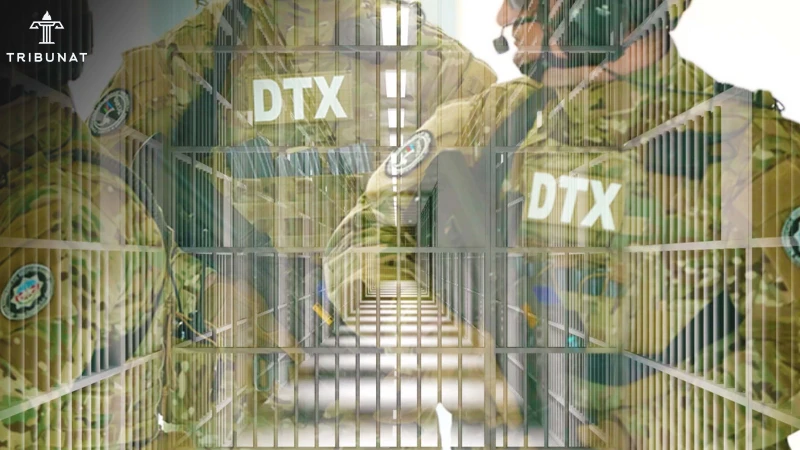
Ali Karimli, the chairman of the Popular Front Party of Azerbaijan (PFPA), was detained on November 29 as a suspect under Article 278.1 of the Criminal Code of the Republic of Azerbaijan (actions aimed at the forcible seizure or forcible retention of power contrary to the Constitution, as well as forcible change of the constitutional structure of the state). He was later indicted under the said article and was detained for 2 months and 15 days during the investigation period by the decision of the Sabail District Court dated December 1, 2025. Since his detention, Karimli has been held in the Temporary Detention Center and Pre-trial Detention Center of the State Security Service (STS), which is conducting an investigation into the criminal case in which he was found guilty.
"Tribunat" analyzed the legality of the existence of the detention center under the State Security Service and the impact of this detention facility on the objectivity of criminal prosecutions conducted in that institution as a whole.
On October 9, 1999, by presidential Decree, the pre-trial detention centers of the Ministry of Internal Affairs were transferred to the Ministry of Justice of the Republic of Azerbaijan. The decree stated that the reason for this was the implementation of a unified correctional labor policy and the alignment of the activities of pre-trial detention centers with standards by Council of Europe.
The Charter of the Ministry of Justice stipulates that the organization of the activities of the penitentiary service, the management of penitentiary institutions and the detention of individuals subject to preventive measures are included in the list of responsibilities of the Ministry (§§9.24 and 9.26). The Charter also indicates the organization of the activities of penitentiary institutions and their control as a direction of activity of the Ministry (§8.11). All pre-trial detention centers in the country operate under the jurisdiction of the Ministry of Justice, which is intended to ensure institutional separation between investigative bodies and places of detention. Nevertheless, the pre-trial detention center subordinate to the State Security Service is an exception to this general legal regime and is subject to regulatory uncertainty in terms of its status, control mechanisms, and degree of independence.
Article 4 of the Law “On Ensuring the Rights and Freedoms of Individuals in Places of Detention” also recognizes only three types of places when determining the classification of places of detention of detainee or arrested: temporary detention places, guardhouse and pre-trial detention centers. The law does not provide for the creation of any additional or mixed form of detention. In this regard, the existence of a place under the State Security Service that simultaneously performs the functions of both a temporary detention place and a pre-trial detention center does not comply with the classification established in the legislation. Since the legal status of such a mixed place of detention is not defined in the legislation, it raises questions in terms of the legitimacy of the place of detention and undermines the principle of legal certainty.
The uncertainty of the legal status of this detention facility, which is subordinate to the State Security Service, also makes it unclear what regulatory regime the internal disciplinary rules applied there are based on. Although the legislation provides for different internal disciplinary rules for temporary detention facilities and pre-trial detention centers, it is not clear whether detention in the said facility is carried out in accordance with the rules of pre-trial detention facilities or temporary detention facilities. This uncertainty also makes it impossible to determine in advance what rights and guarantees the persons detained there enjoy.
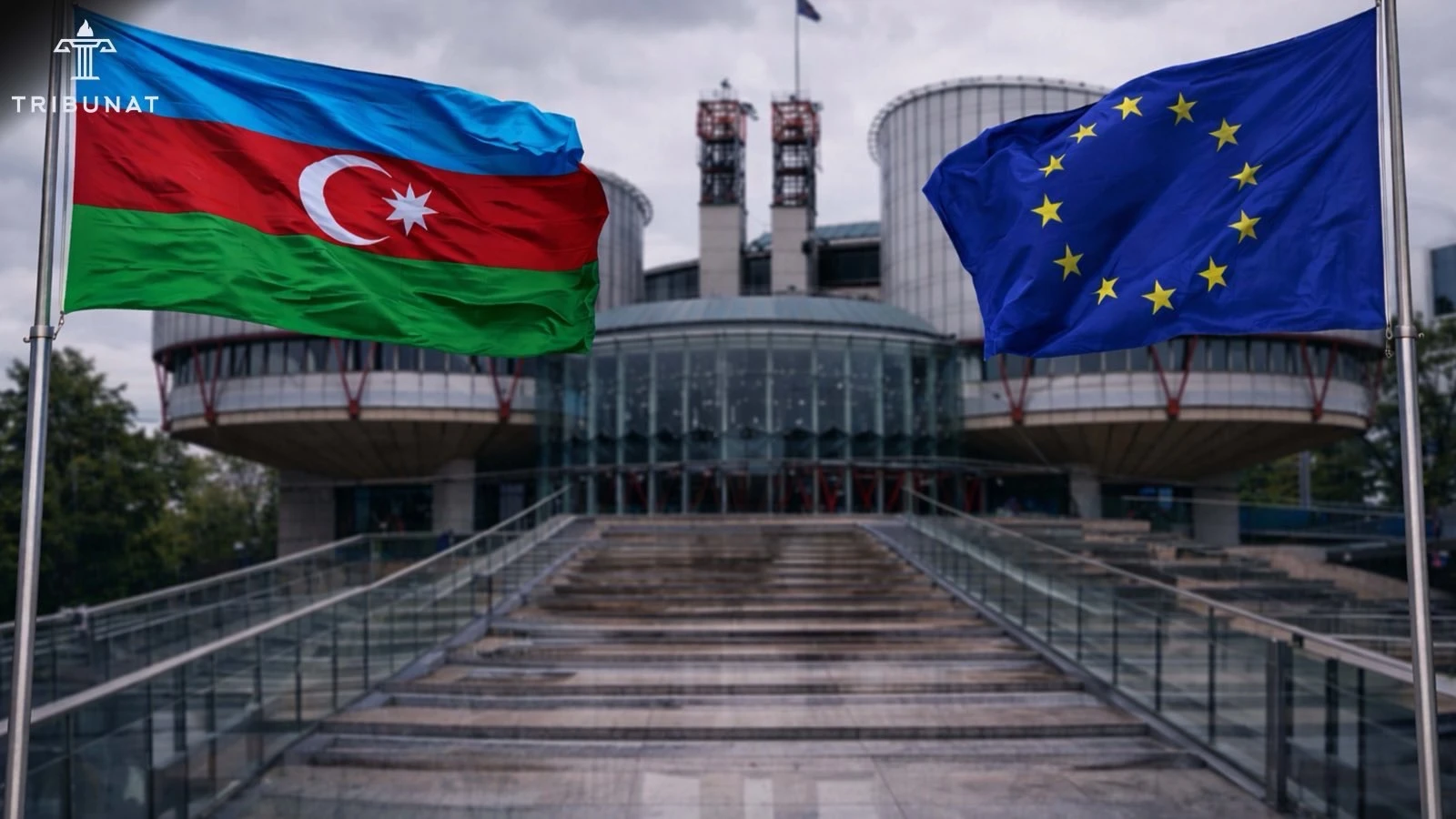
The European Committee for the Prevention of Torture and Inhuman or Degrading Treatment or Punishment (CPT) clearly stated in paragraph 62 of its report on its visit to Azerbaijan in 2016, as well as in paragraph 47 of its 2017 report, that the State Security Service detention facility should not be used for long-term detention, i.e. for more than a few weeks. The Committee recommended to the Azerbaijani authorities that if it is necessary to continue detention beyond this period during the investigation, individual concerned should be transferred to an appropriate pre-trial detention institutions.
Simultaneously, the fact that the institution actually functions as a pre-trial detention center raises doubts in terms of compliance with the European Prison Rules, in particular §10.2. The said clause iterates that individuals who have been sentenced to a preventive measure of detention by a judicial authority, as well as individuals who have been convicted and deprived of their liberty, should be held only in institutions designated for these two categories.
Resultantly, as well as given the current absence of adequate institutional separation between the detention facility and the investigative structures of the State Security Service, CPT deemed it necessary to transfer responsibility for the detention facility to the Ministry of Justice.
In 2009, the United Nations Human Rights Committee expressed concern about the existence of a pre-trial detention center under the then Ministry of National Security, and noted that it should be closed or placed under the jurisdiction of the Ministry of Justice (§10).
The general standards developed by the CPT clearly indicate that the institutional separation of investigative and detention functions is one of the key safeguards for preventing ill-treatment. 6th General Report states that the period immediately following deprivation of liberty is the period when the risk of torture and ill-treatment is highest, and that access to independent legal counsel and institutional supervision are essential safeguards during this period. The subordination of places of detention to investigative authorities structurally undermines the effective application of these safeguards (§15). CPT also expressed serious concern in its 12th General Report about the practice in some countries of each operational department within the police forces (such as the fight against drugs, organised crime and terrorism) having its own detention facility, managed and staffed by officers from that department (§49). In the Committee’s view, the fact that operational departments carrying out investigations also perform detention functions creates structural risks and increases the likelihood of ill-treatment. The Committee therefore recommends that such an approach be abandoned and that detention facilities be organised as institutionally independent, centralised detention facilities from the investigative authorities. These facilities should be managed by a dedicated staff specifically trained for the detention function.
Code of Criminal Procedure of Azerbaijan also emphasizes the protection of an individual from abuse of official authority, as well as the comprehensive, complete and objective investigation of all cases related to criminal prosecution, among the main tasks of criminal proceedings (Article 8.0.2, 8.0.3). Nonetheless, the fact that the body conducting the investigation and the place of detention where the accused is held have the same organizational subordination weakens the implementation of these tasks from a structural point of view. Such a model increases the risk of pressure, abuse and indirect restriction of the rights of defense in relation to the accused by giving the investigative body de facto control tools.
Under Article 6 of the European Convention on Human Rights, everyone is entitled to a fair and public hearing within a reasonable time by an independent and impartial tribunal established by law. Article 6 of the Convention also covers pre-trial proceedings (Imbrioscia v. Switzerland, § 36).
According to the case-law of the ECtHR, although the subjective concerns of the accused are not decisive, the main criterion is whether those concerns are justified to an objective observer (Padovani v. Italy, §27). The fact that the investigating authority simultaneously monitors the conditions of detention creates the risk of weakening the defense from a psychological and institutional perspective, which may lead to the conclusion that the accused’s doubts about the independence of the court and the investigation are objectively justified.
In accordance with the European Prison Rules, prisons must be under the responsibility of public authorities separate from the military, police or criminal investigation authorities (§71).
A clear separation of functions is necessary in criminal justice: the police and investigative bodies perform the function of detecting and prosecuting crimes, while the penitentiary bodies perform the function of executing court sentences and reforming the convict. The concentration of these functions within the same structure can lead to the strengthening of the repressive powers of the state, the weakening of the legal status of the convict and an increase in the risk of abuse of power. A separate management model ensures legal balance and serves as an institutional guarantee that deprivation of liberty is limited to a court sentence.
Consequently, the detention of individuals in criminal cases investigated by the State Security Service in a detention facility subordinate to this institution poses serious risks in terms of the principles of independence, impartiality and objective reliability, which are key components of the right to a fair trial under Article 6 of the ECHR, as well as in light of the requirements of domestic criminal procedural legislation. The continued existence of the detention facility subordinate to the State Security Service also constitutes a disregard for the recommendations by CPT.