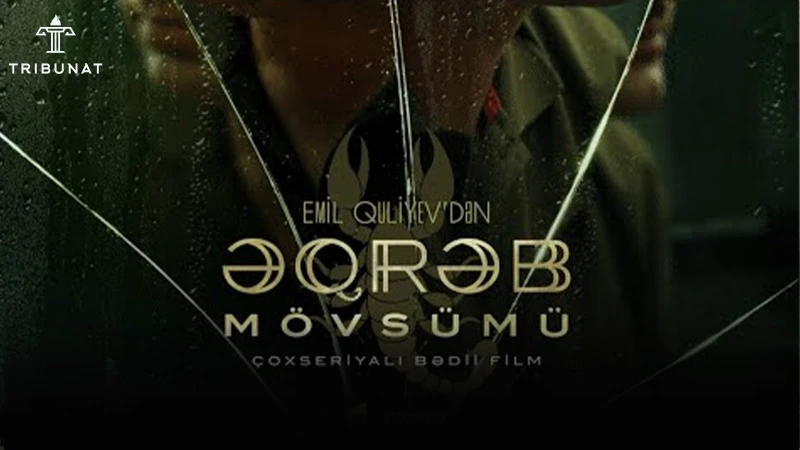
Not long ago, the statements insulting the legal profession in “Scorpion season” series broadcast on “İctimai TV” (Public Television Broadcaster – red.) caused disagreement in society, especially in the professional legal community. Even though the discussions have lost their relevance, there is still a necessity to discuss the limits of freedom of expression in cases where artistic creativity and professional reputation collide.
“Tribunat” analyzed whether the opinions expressed in the series about advocates are within the scope of freedom of expression.
In the first episode of the series, during a conversation between prosecutors, one of them proposes to change the position of a public assistant working in the prosecutor's office, and the other employee responds by saying, “Göndər vəkildən zaddan işləsin, kargüzarlığa işçi lazım deyil” (which can be translated as - “Send him to work as an advocate or something, we don't need an employee for the registry” – red.) In the next episode, a clearly unethical expression oğraş (which can be roughly translated as “pimp” – red.) is uttered against an advocate, performing own professional activities.
The Constitution of the Republic of Azerbaijan (Article 47), the European Convention on Human Rights (Article 8) and the International Covenant on Civil and Political Rights (Article 19), to which the State is a party, protect and legitimate any form of freedom of expression. Nevertheless, freedom of expression is not an absolute right and may be restricted in certain circumstances. These restrictions shall be imposed in a manner prescribed by law and for purposes which are necessary in a democratic society. Such purposes include: national security (1), territorial integrity or the interests of public order (2), for the prevention of disorder or crime (3), for the protection of health or morals (4), for the protection of the reputation or rights of others (5), for the prevention of disclosure of confidential information (6), or for maintaining the integrity and impartiality of the judiciary (7).
Additionally, Article 14 of the Law “On Media” establishes a number of requirements for information published and (or) broadcast in the media. Among these requirements, it is indicated that the use of words and expressions of immoral lexical (profanity) content, gestures (Article 14.1.6) and humiliation of honor and dignity, staining of professional reputation should not be allowed (Article 14.1.7). These requirements also apply to audiovisual broadcasters and broadcasting (Article 39.1.3).
The European Court has stressed in its case-law that freedom of expression in the arts is an integral part of a democratic society. Nonetheless, in Vereinigung Bildender Künstler v. Austria, the Court drew a line between forms of artistic creativity and freedom of expression. The Court indicated that forms of artistic expression and satire can encourage critical thinking (§33). However, if the purpose of artistic expression is solely to insult and humiliate, this goes beyond the scope of freedom of expression and a line must be drawn. The pivotal issue is not simply the use of harsh and vulgar language, but the context in which these expressions are used and what purpose they serve. Unethical and immoral expressions can be assessed differently within the general artistic text and protected by freedom of expression.
If opinions within the framework of freedom of expression are intended solely for humiliation and insults, then such expressions fall outside the scope of legal protection (Müller and Others v. Switzerland, § 48). Resultantly, even in the case of artistic representation, if the expressions are intended solely to discredit a profession or group, they are no longer protected under the freedom of expression. Moreover, the European Court has shown in Morice v. France that advocates must possess public confidence in order to be able to function effectively. If the image of the profession is consistently presented in a weak and frivolous manner in the media, this may undermine public confidence in the advocates’s ability to act impartially and professionally in legal proceedings.
In such a scenario, to determine whether the episodes referenced in “Scorpion season” fall within the scope of freedom of expression, it is vital to look at the overall content of the series and the form of expression of the controversial statements.
The “Scorpion season” series is a thoughtful project shot in the drama, detective, and thriller genres, and aims not to entertain, but to present authentic and pressing social issues.
In the controversial first episode, it is recommended that due to lack of need for employees in the registry a public assistant be sent to work as advocate or something else (rough translation of “zad” expression which would be discussed further – red.). The expression “zad” is often used in Azerbaijani to mean trivialization, frivolity, and lowering of social status. In other words, the person speaking in this form does not take the profession of an “advocate” seriously, presenting it not as a profession, but as a secondary occupation, and considers it preferable to work as a clerk in the prosecutor's office. Since the registry does not need employees, it is recommended that she should be sent to work as an advocate or something else.
In order to determine whether freedom of expression is breached, it is necessary to determine the purpose of the episode.
Information about the problems of the legal profession in Azerbaijan is periodically in the spotlight. In some cases, this information is shared publicly by advocates themselves. For instance, recently, defense attorneys have written on their social media accounts about illegal actions committed against them by investigative bodies. These shares and comments show that there are other lawyers who have been subjected to such illegal actions, and even those who have refused to work as defense attorneys in criminal cases for this reason.
Additionally, the ratio of acquittals to total convictions in the country fluctuates around 1 percent. For example, in 2020, this figure was 1.06 percent, and in 2022, it was 1.21 percent. These figures show that, at best, only one out of every 100 accused in the courts is acquitted.
If to summarize, the information disseminated, the picture is as follows: the police easily tell the advocate “dur bas bayıra” (which is the vulgar form of expressing the need for someone to leave – red.) and close the door of the department, beat the advocate, the advocate sets himself on fire in front of the administrative building of the Bar Association due to the difficulties he faces in his professional activities, acquittals in criminal cases are extremely rare and the like. It implies that the institution of the legal profession is fragile in reality. The creative staff of the series also claim that they set up the dialogues in this way in order to make the content closer to reality and believable. In such a case, the purpose of the series is not to damage the reputation of the professional community, but to convey the reality and the current situation (preferring to work in the prosecutor's office to work as an advocate) to the viewer. This situation does not violate freedom of expression.
In the second episode, the prosecutor's office employee presents the legal advice given by the advocate as being untrue in order to obtain a statement from the accused, and the accused utters the phrase “hanı o oğraş vəkil” (which is translated as “where is this pimp advocate?”) about the advocate presenting her false information.
The word “oğraş” means “a person who arranges for a meeting by stealth”, that is, a kind of “inciter of prostitution” and is considered jargon. The uncluttered use of this expression on television is considered a violation of the prohibition on the use of immoral lexicon (swearing, obscene expressions and gestures) set forth in Article 14.1.6 of the Law “On Media”.
Even though it is a separate procedural violation for prosecutors to question an accused person without the presence of an advocate and to provide false information to obtain a statement from the accused, the word “oğraş” in that episode is not directed at the legal profession as a whole, but at the personality of a specific advocate. Accordingly, the statement damages the reputation of another person, is subject to interference in accordance with the law, and that this interference has a legitimate purpose, and raises the question of whether it is necessary in a democratic society.
“Tribunat” concludes that, the expression “oğraş” used in an episode of the “Scorpion season” TV series against a specific advocate is unethical and offensive in nature and violates the requirements of the Law “On Media” regarding immoral lexicon, raising the issue of a collision between freedom of expression and the right to respect for private life. In the second expression - “Göndər vəkildən zaddan işləsin, kargüzarlığa işçi lazım deyil” - the issue touches upon a deeper structural issue. The derogatory approach to the legal profession here is not accidental and reflects the current reality. The role of advocates in the justice system in Azerbaijan has been systematically weakened for a long time, and this is also reflected in legal practice and judiciary data. Against the background of all these facts, the presentation of the legal profession in the series as a “second-class” profession is protected by freedom of expression, since it does not reflect criticism, but simply a replication of a harsh reality - an attitude accepted by society and repeated in real life.
For situations to change and the reputation of the legal profession to increase, the responsibility lies not with the media and the creative team that produced the series, but within the system that created this certainty and is disinterested in any transformation.