Can an unused vehicle cause a refusal to be provided with targeted social assistance?
Analysis
The wife of Agil Humbatov, an activist of the APFP arrested in 2021, held protests in front of government buildings and demanded targeted social assistance for her three minor children.
This was reported by the Turan News Agency.
Mrs. Humbatova, one of whose children is autistic, receives 272 (two hundred and seventy-two) manats allowance for the child, and this amount is the only means for the family of four to live. Mrs. Humbatova said that although she applied to the relevant authorities to receive the targeted state social assistance, she received a refusal.
In response to Turan's information request, the press service of the Ministry of Labor and Social Protection of Population said that an inspection was carried out, and as a result, it was found that the Humbatovs family had a motorcycle (belonging to the imprisoned Agil Humbatov); therefore, social assistance was refused.
Is there a legal basis for the answer given by the press service of the ministry? What is targeted state social assistance and to whom and under what conditions can it be provided?
Tribunat examined the answers to these questions.
According to the Law on Targeted State Social Assistance, targeted state social assistance (TSSA) is monetary assistance provided by the state to low-income families.
Article 3 of the Law states that low-income families whose average monthly income is below the sum of needs for each family member for reasons beyond their control have the right to receive social assistance. These reasons include:
- incapacitation of family members;
- taking care of a disabled person with 81-100 percent impairment of body functions, a disabled person under the age of 18, or a child under the age of 8 by a member of the family able to work;
- full-time education up to the age of 23;
- registration as unemployed in the State Employment Service and its local bodies due to the liquidation of the state body or legal entity or the reduction of the number of employees or staff;
- death;
- being considered missing or dead by the court;
- deprivation of liberty;
- not knowing the whereabouts of a family member
In Resolution No. 37 of the Cabinet of Ministers dated February 5, 2016, on the approval of the Rules for applying for the receipt of targeted state social assistance, its appointment, granting, and refusal (hereinafter the Rules), "receiving unemployment insurance payments in accordance with the Law on Unemployment Insurance by the family member who is able to work" was also mentioned as the reason.
But what is the criterion of need?
According to the Law on Targeted State Social Assistance, the criterion of need is the limit approved for each year together with the state budget for the purpose of determining the targeted state social assistance depending on the minimum living wage for the main socio-demographic groups of the population.
According to the Law on the Limit of the Criterion of Need for 2023 in the Republic of Azerbaijan, the amount of the criterion of need for each person in the country is 246 (two hundred and forty-six) manats.
Although the total amount of the criterion of need for the mother and 3 children in the Humbatovs family is 984 (nine hundred and eighty-four) manats, the family's only source of livelihood is the allowance of 272 manats for an autistic child. The sharp difference of 712 manats, the presence of a disabled person under the age of 18 in the family and the deprivation of freedom of one family member indicate the need for the Humbatovs to receive TSSA.
However, according to paragraph 3.7.4 of the aforementioned Rules, social assistance is refused if the family owns or uses a vehicle.
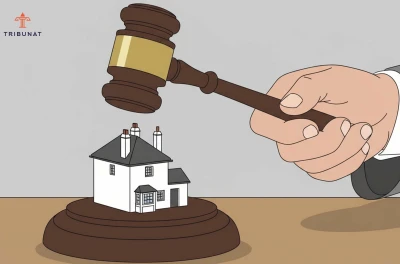
Just like refusing to grant social assistance to the family due to the motorcycle belonging to Agil Humbatov.
According to Article 1 of the Law on Traffic, a vehicle is a human-controlled device with structural capabilities for road movement, as well as its trailer. Furthermore, in part 26 of the same article, a motorcycle is defined as "a two-wheeled mechanical vehicle with an engine, with or without a carriage."
It is debatable why the requirement in the Rules is so specific and how successful its application to the current situation is. Probably, this requirement is related to the fact that if one of the family members owns a vehicle, the possible income from the use of that vehicle can increase the monthly income of the family. While the approach may be justified in some ways, it cannot be considered successful in all situations. In fact, although the Humbatovs family has a vehicle belonging to the head of the family, the person cannot use that vehicle because he is deprived of his freedom. That is, the existence of a motorcycle belonging to Agil Humbatov does not have any positive effect on the monthly income of that family.
The fact that there are enough families in the same or similar situation as the Humbatovs and that the citizens actually need state assistance but cannot receive it for one reason or another show that there are gaps and contradictions in the grounds for granting TSSA.
The Law on Targeted State Social Assistance states that this assistance is monetary assistance provided by the state to low-income families. According to Article 4 of the Law, the purpose of social assistance is to ensure social protection of low-income families. However, despite the fact that the Humbatovs family belongs to a group of low-income families, the family's ownership of the vehicle prevents the provision of this assistance. In other words, the limits of the concept of a low-income family defined by the Law are limited by the Rules.
According to Article 149 of the Constitution, the Resolutions of the Cabinet of Ministers of the Republic of Azerbaijan should not contradict the Constitution, laws, and decrees of the President of the Republic of Azerbaijan.
Article 2 of the Law on Normative Legal Acts states that when a decree or other normative legal act conflicts with the law, the law is applied.
As can be seen, the Rules for applying for the receipt of targeted state social assistance, its appointment, granting, and refusal, approved by the Resolution of the Cabinet of Ministers dated February 5, 2016, No. 37, limit the concept of a low-income family defined by the Law on Targeted State Social Assistance and essentially contradict it.
This means that in the event of a collision, the requirements of the Law on Targeted State Social Assistance should be taken into account in providing the said assistance.
Because the law is a normative legal act with superior legal force.
At the same time, the Rules approved by the Cabinet of Ministers should be revised and these Rules should be improved according to the requirements of the law on providing social assistance.
-
Həbsdə olan Hümbətovun ailəsi motosikletə görə dövlət yardımından məhrum edilib,https://www.turan.az/ext/news/2023/9/free/Social/az/8699.htm
-
“Azərbaycan Respublikasında 2023-cü il üçün ehtiyac meyarının həddi haqqında” AR Qanunu, https://president.az/az/articles/view/58493
-
“Normativ hüquqi aktlar haqqında” Qanun, https://e-qanun.az/framework/21300 “Ünvanlı dövlət sosial yardımı haqqında” Qanun, https://e-qanun.az/framework/10854
-
“Yol hərəkəti haqqında” Qanun,https://e-qanun.az/framework/3423
“Ünvanlı dövlət sosial yardımın alınması üçün müraciət edilməsi, onun təyin olunması, verilməsi və verilməsindən imtina edilməsi Qaydaları”nın təsdiq edilməsi haqqında” Nazirlər Kabinetinin 5 fevral 2016-cı il tarixli Qərarı,https://e-qanun.az/framework/32084
Azərbaycan Konstitusiyası, https://e-qanun.az/framework/897