Despite the End of the Karabakh Conflict, Persistent Challenges Remain: Why Aren't Internally Displaced Persons Returning to Their Former Apartments?
Analysis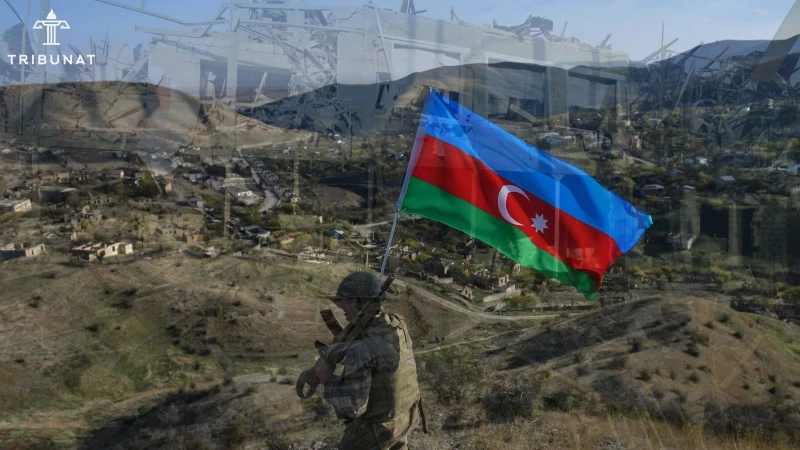
While almost 5 years have passed since the Second Karabakh War, the humanitarian consequences of the first war still linger. As a result of the first war, internally displaced persons (IDPs) settled in vacated or owner-occupied apartments in various parts of the country.
Despite numerous efforts to expand the housing stock for IDPs, occasional media reports highlight the ongoing severity of the issue and raise serious concerns for both IDPs and property owners unable to exercise their rights.
Lawyer Asabali Mustafayev, who has represented such owners in domestic and international instances, reveals the number of such apartments is about 5,000.
In accordance with the Constitution of Azerbaijan, the highest objective of the state is to ensure rights and liberties and a proper standard of living. The Basic Law states that the state is concerned with improving the well-being of the people and each citizen, their social protection and a decent standard of living. In this case, two principles may come into play: protection of property rights and resolving issues of social security of individuals belonging to vulnerable groups, bearing in mind obligations to citizens. It is worth noting that while following the last referendum, Article 29, which regulates property rights, was amended with a provision stating that private property entails social responsibilities, this article was not raised as an argument by either the relevant government agencies or the courts. Since there is no interpretation in the legislation of what social obligations induce, it is infeasible to claim whether they will be specifically applied to these cases. On the other hand, there is no reference to the relevant Constitutional article in court decisions or statements by government agencies on this issue.
The regulation of property rights as stipulated in detail by the Civil Code, and specifically by the Housing Code. Issues of social security of IDPs are regulated by the Law “On Social Protection of Internally Displaced Persons and Persons Considered Alike” and the Regulations of the Cabinet of Ministers on their housing. By law, the provision of living space to IDPs is one of the main obligations of the state in the context of social protection. For this purpose, residential, administrative and auxiliary buildings that are suitable for living or can be made such are used. Else, IDPs are to be settled in camps. The law also indicates that temporary settlement of IDPs is allowed if the rights and legitimate interests of other persons are not breached.
In disputes arisen, domestic courts cite the State Program “On Improving the Living Conditions and Developing the Employment of Refugees and Internally Displaced Persons” of 2004 as an impediment to the eviction of IDPs from housing stocks owned by other citizens. The program envisaged activities to optimize the housing and living conditions of IDPs during the relevant period. In these cases, while state authorities try to ensure the rights of use of the owner of the occupied apartment, they refuse to satisfy the owners' demands, since the IDPs do not have other living space taking into account Program’s preconditions. The presidential decree approving the Program prohibited the relevant state bodies from evicting IDPs from public buildings, apartments, land plots and other facilities where they temporarily settled in 1992-1998. This point conflicts with the above-mentioned Law and the Regulations of the Cabinet of Ministers. Even though a long time has passed, no steps have been taken to resolve this contradiction.
Citizens who have not been satisfied in domestic courts have appealed to the European Court of Human Rights (ECtHR). The main issues complained about by citizens are the non-enforcement of court decisions on the eviction of IDPs from occupied apartments and the resulting violation of property rights. The ECtHR stated that in these cases, the right to a fair trial (Article 6) and the right to property (Article 1 of Protocol No. 1) of the Convention were violated. The Court noted that the indefinite postponement of the eviction of IDPs from occupied apartments leads to a violation of the rights of individuals protected by domestic legislation and the Convention. In spite of the reference of domestic courts’ reference to the above-mentioned State Program, the Program does not contain a postponement procedure. Additionally, domestic legislation directly states settlement of IDPs in other places, if their initial settlement violates the rights and interests of other persons. Accordingly, the failure to evict violates the rights of citizens to access to court and property. Following the announcement of the final judgment by the ECtHR on this issue in the cases of Akimova v. Azerbaijan and Jafarov v. Azerbaijan, the Court has also found violations in several similar cases.
Consistent with local media, 2,228 families or 8,517 people have been resettled in Karabakh. During the period of publication of the blog, an additional 42 families, or 205 people, were relocated. The same report states that currently 40,000 people live in Karabakh, “including former IDPs who have been transferred, workers in public and private sectors, as well as those receiving education.” The reconstruction of Karabakh, as well as issues related to the provision of housing for IDPs, are reflected in the “ State Program on the Great Return to the Liberated Territories of the Republic of Azerbaijan”, which has been promulgated in 2022 and is valid until 2026. Vis-a-vis Program, 10,270 families by 2025, and 34,500 by 2026 should be resettled. If we take the current resettled population per family as an approximation, this figure ultimately means the resettlement of about 132,000 IDPs. When compared with current figures, the question arises as to how realistic this target is.
But how and why are families selected for resettlement? It is clear from the program and the annual reports of the State Committee for Refugees and Internally Displaced Persons (hereinafter referred to as the Refugee Committee), the state body designated for the relevant issue, that the main indicator for resettlement is the sociological survey among IDPs. According to the program, surveys should be conducted amongst 45 thousand families (approximately 171 thousand people). Interestingly enough, although the Program states that the purpose of the sociological survey, as the provision forecasts regarding migration, preliminary agreements and refusal protocols are signed with citizens as a result of the survey, per Refugee Committee. According to the latest information, the Refugee Committee's activity report for 2023, such a survey was conducted with 28,818 displaced families (105,170 people). The lack of openness of sociological survey data and the general lack of transparency of the process complicate the analysis of the results. While there is an online platform for reporting on the Great Return Program, access to the platform is limited. When trying to access the platform with the authentication offers offered by E-government services, it reports lack permission to access the system.
Effective implementation of the relocation necessitates the priority transfer of IDPs residing in non-residential facilities and residential facilities owned by other citizens. However, such a step may have violated the rights of IDPs to choose their place of residence. The Refugee Committee’s annual activity report for 2018 noted that about 250 thousand IDPs benefited from the provision of housing to IDPs. Till the relevant period, the expenditure for these purposes amounted to 2.3 billion AZN. It should be no secret that no matter how severe the hardships initially experienced by IDPs, some may refuse relocation. The difficulty in this context stems from the lack of a legislative framework regarding resettlement and the failure to adapt existing regulations to current realities. Even though the preparation and discussion of legislation regulating issues arising from the Great Return have been put on the agenda, no practical steps have been taken in this direction. Despite the fact that the discussion was included in the agenda of the parliamentary committee meeting, neither a draft nor discussions have been held to date. The lack of a legislative framework has recently led to heated discussions regarding the rental of housing provided to relocate] IDPs to other individuals. Another reason dettering IDPs from resettlement is the unsatisfactory access to the labor market and infrastructure in the liberated territories. While, according to the program, measures for infrastructure and employment should be carried out in parallel with resettlement, it seems that the process is not being effectively ensured. In that regard, allegations of futile resettlement processes are met with an ambiguously aggressive attitude from government agencies and pro-government media, and in some individual cases, they lead to the intervention of law enforcement agencies.
In conclusion, the implementation of policy plans lacking public participation and influence in a broad manner leads to the emergence of problematic cases in terms of abuse and access to rights, both for IDPs and, specifically, in the cases reflected above. In order to prevent such cases, it is necessary to improve the legislative framework and bring the resettlement process to the discussion in communities.
Redaktor.az, “Məcburi köçkünlərin zəbt etdiyi şəxsi mənzillər nə vaxt sahibinə qaytarılacaq? - Rəsmi AÇIQLAMA”, 16.07.2024
Avropa İnsan Hüquqları Məhkəməsi, Cəfərov Azərbaycana qarşı, 11 fevral 2010
Avropa İnsan Hüquqları Məhkəməsi, Akimova Azərbaycan qarşı, 27 sentyabr 2007
Avropa İnsan Hüquqları Məhkəməsi, Əliyeva və digərləri Azərbaycana qarşı, 8 oktyabr 2020
Qafqazinfo, “Azad olunmuş ərazilərə köçürülən əhalinin sayı ilə bağlı - Təhlil”, 07.10.2024
AZƏRTAC, “Cəbrayılda daha 42 ailəyə evlərinin açarları təqdim olunub”, 17.02.2025
Azərbaycan Respublikasının Qaçqınların və Məcburi Köçkünlərin İşləri üzrə Dövlət Komitəsi tərəfindən 2023-cü il ərzində görülmüş işlər barədə hesabatı
Azərbaycan Respublikasının Qaçqınların və Məcburi Köçkünlərin İşləri üzrə Dövlət Komitəsi tərəfindən 2018-ci il ərzində görülmüş işlər barədə hesabatı
Report, “Azad edilmiş ərazilərə “Böyük Qayıdış və reinteqrasiya” ilə bağlı qanun layihəsi qəbul ediləcək”, 25.01.2023
Yeni Müsavat, “Qarabağda məcburi köçkünlərin öz evlərini kirayə verib, pul qazanmasında nə qəbahət var?”, 21.09.2024
Azadlıq Radiosu, “Şuşaya qayıtmaq istəyənlər: Azı 800-1000 manatlıq iş olmalıdır”, 09.09.2021
Azərbaycan Respublikasının Qaçqınların və Məcburi Köçkünlərin İşləri üzrə Dövlət Komitəsinin Mətbuat Xidmətinin məlumatı, 25.10.2023
FaktYoxla Lab, “Azadlıq radiosu”nun qayıdışla bağlı hazırladığı 4 reportaj: “Şuşaya qayıtmağın mənası yoxdur”, 02.04.2023
Abzas Media, “Laçın köçkünü: "Yaşamaq üçün yer istədim, polisə apardılar”
Azərbaycan Respublikasının Konstitusiyası
Azərbaycan Respublikasının “Məcburi köçkünlərin və onlara bərabər tutulan şəxslərin sosial müdafiəsi haqqında” Qanunu
Azərbaycan Respublikasının “Qaçqınların və məcburi köçkünlərin yaşayış şəraitinin yaxşılaşdırılması və məşğuliyyətinin inkişaf olunması haqqında” Dövlət Proqramı
Sfera az, “Qaçqın və köçkünlər cəmiyyətimizin ən həssas təbəqələrindən biridir”, 31.05.2020